

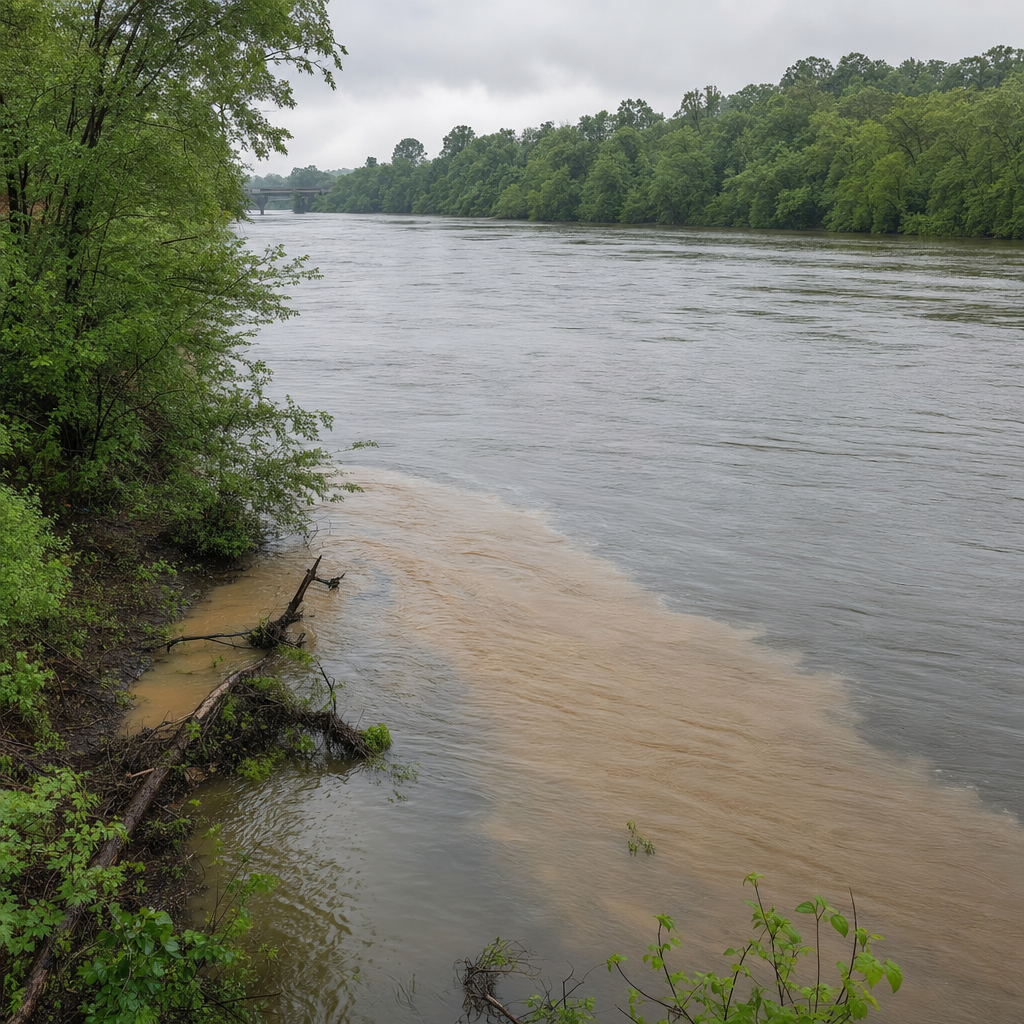
An extensive fish kill observed in Georgia’s Chattahoochee River is being attributed to a combination of intense rainfall and subsequent runoff from the Atlanta metropolitan area.
Following months of severe drought across the state, several days of torrential downpours and flash flooding in Atlanta and Northern Georgia created perilous conditions within the river system.
On May 20th, areas within Atlanta’s I-285 perimeter experienced an estimated three inches of rain in less than an hour, as reported by Chattahoochee Riverkeeper. This deluge generated stormwater runoff laden with pollutants, which flowed into Peachtree Creek over the subsequent 24 hours before eventually discharging into the Chattahoochee River south of the city.
By the following day, observers reported widespread aquatic fatalities among the fish population.
Experts have identified a confluence of critical factors contributing to this ecological disaster.
In a May 23rd statement, Chattahoochee Riverkeeper characterized the river conditions and the resulting fish kill as “unprecedented.”
The organization highlighted three primary environmental elements that converged last week, creating a “perfect storm” for the mass death of aquatic life.
Firstly, prolonged drought conditions in Georgia have led to exceptionally low water levels in the river. The U.S. Army Corps of Engineers manages these levels via a system of dams. While water can be released from key reservoirs like Lake Lanier (north of Atlanta) to augment flow, these reservoirs are also significantly depleted due to the lack of rain. This reduced flow results in slower water movement, increasing fish exposure time to potential pollutants.
Secondly, the stormwater runoff entering Peachtree Creek from the city contained elevated levels of contaminants.
Chattahoochee Riverkeeper noted, “After striking warm urban surfaces, the stormwater’s temperature would have been elevated compared to the creek’s typical temperature. Moreover, due to the preceding dry spell, the stormwater carried an unusually high load of accumulated pollutants and nutrient pollution into Peachtree Creek and subsequently the Chattahoochee River.”
Finally, the rapid rainfall likely triggered an overflow within the sewer system. This meant that the City of Atlanta’s combined sewer system and West Area Tunnel discharged untreated wastewater and polluted stormwater directly into Peachtree Creek. These combined conditions, according to Chattahoochee Riverkeeper, set the stage for a massive fish die-off, the scale of which has not been witnessed in modern history for the river.
Jason Ulseth, Executive Director of the Chattahoochee Riverkeeper, informed CBS News that the fish mortality extends approximately 20 miles downstream, an event he has not encountered in his two decades with the organization.
Ulseth explained, “There’s been a substantial period for materials to accumulate on roadways, parking lots, and dog parks. Consequently, a heavy flush of rain like this washes a significant amount of contaminants into the system.” He emphasized the broader ecological consequences: “This creates problems throughout the food chain, affecting other animals that rely on fish for their sustenance. Additionally, many anglers frequent this stretch, and people are deeply distressed. I am personally very upset as a fisherman, seeing these prized fish dead due to an issue we’ve been striving to mitigate for so long.”
Ulseth also remarked that while a storm of this magnitude, like the one over Atlanta last Wednesday, was once considered a 1-in-150-year occurrence, similar events have transpired multiple times within the last decade.
Atlanta’s infrastructure appears ill-equipped to manage such high volumes of rainfall, leading not only to environmental damage but also posing risks to its residents.
Last week, a section of the Atlanta Connector was closed when rainwater accumulated several feet deep, rendering vehicles impassable. Multiple vehicles became submerged, and in one instance, a driver required rescue from her car’s roof.
Elsewhere in the city, roads transformed into temporary lakes, forcing Waymo’s autonomous vehicles to suspend service due to high water. Furthermore, a power failure at a nearby water treatment facility led to a widespread boil water advisory for a significant portion of central Atlanta towards the end of the week.
Many residents consistently report that these issues have persisted for decades. The National Weather Service’s forecast of continued rainy conditions and potential flooding suggests these problems may recur in the coming week.