
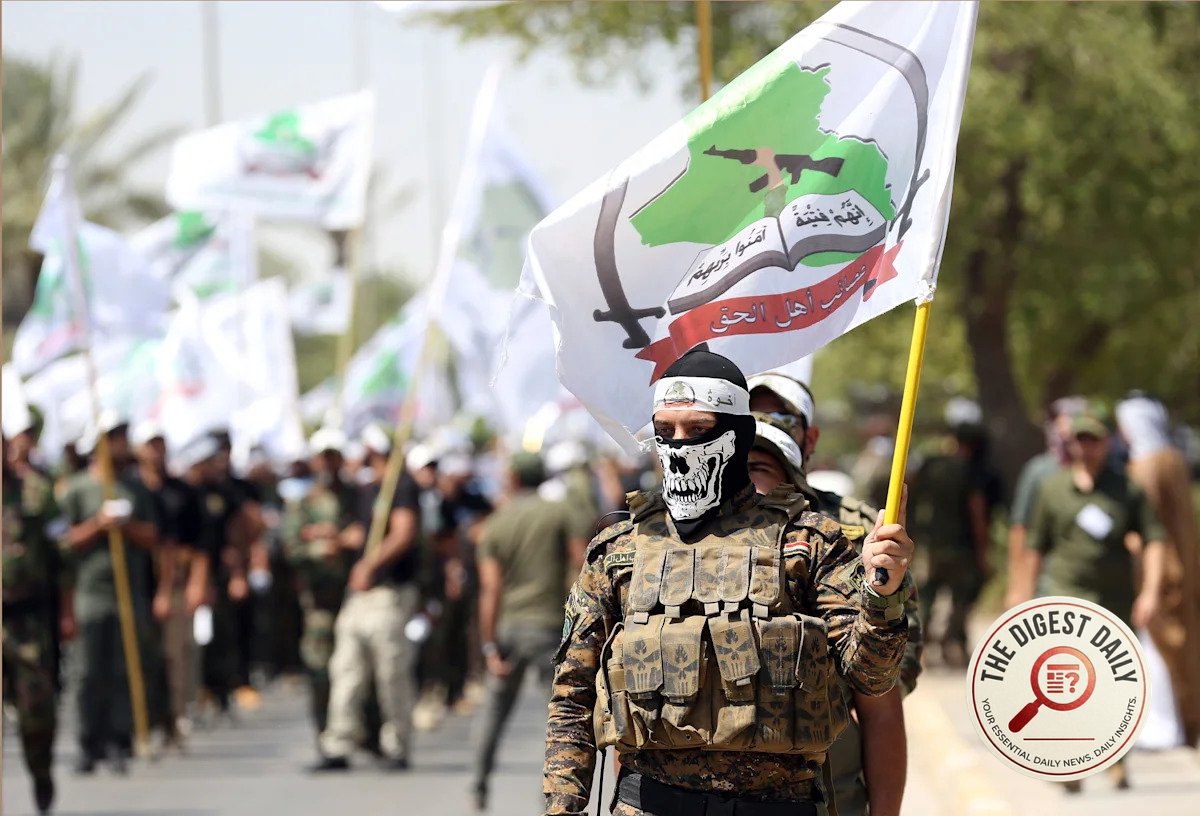
They are finally talking about putting the guns down. Or so they claim. On Tuesday, two of Iraq’s heaviest-hitting, Iran-backed militias announced they would start handing their arsenals over to the government. It is a massive, if highly suspect, step for a new administration trying to rein in warlords who have run wild for years under the thin guise of state authority.
Asaib Ahl al-Haq is setting up a committee. They want to count their fighters, catalog their weapons, and play nice with the military. They claim this sudden burst of civic duty comes from listening to Iraq’s top Shiite clerics and the Coordination Framework, the pro-Iran political bloc currently running the show in Baghdad. Meanwhile, the Imam Ali Brigades chimed in with their own lofty rhetoric. They declared it is time to build a sovereign state. They want the government to hold the monopoly on violence. We will see.
The region is on fire. The war sparked by U.S. and Israeli strikes on Iran back in February laid bare just how weak Baghdad really is. For months, Washington and these militias traded blows, turning Iraq into a proxy playground until a shaky ceasefire in April. Enter Ali al-Zaidi. He is a 40-year-old banker turned Prime Minister, sworn in just last month. Under heavy pressure from a skeptical Trump administration—which threatens to cut off cash and defense support—al-Zaidi has made disarming these groups his signature fight.
He is not entirely alone. Last week, the mercurial Shiite cleric Muqtada al-Sadr announced his Peace Brigades would sever political ties and merge into the state. But the irony is thick. Iraqi taxpayers have been funding these militias for years. They are embedded deep inside the security apparatus, drawing state salaries while taking orders from Tehran. Washington is sick of it.
Not everyone is playing along. Some groups refuse. Kataib Hezbollah and Harakat al-Nujaba flatly rejected the disarmament push, arguing that as long as foreign troops remain on Iraqi soil, the “resistance” continues. Kataib Hezbollah patted the other groups on the back for disarming but made it clear they are keeping their own hardware. Instead of surrendering, they offered to “coordinate” with the Popular Mobilization Forces. That is the state-funded umbrella group created in 2014 to fight ISIS. It is a convenient loophole. Many of those units still answer to Iran, not Baghdad. The guns aren’t gone yet.