
We have reached the point in the fantasy baseball calendar where panic sets in. Managers are staring at highly drafted players who are actively tanking their rosters. But panic is a bad strategy. Instead, we look at the underlying metrics to separate the genuinely broken from the merely unlucky. Here is how you should handle five high-profile hitters currently testing your patience.
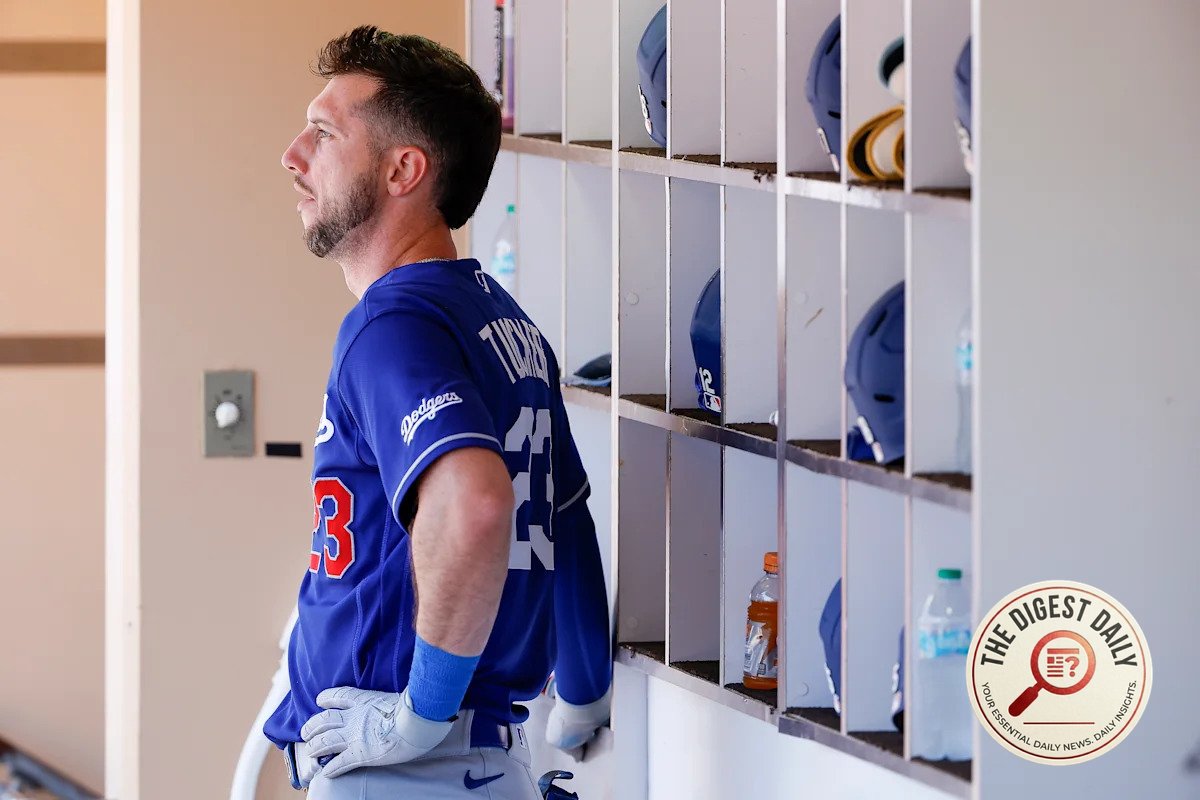
Kyle Tucker, OF, Dodgers
Moving teams again has not agreed with Tucker. He is failing to meet expectations. Injuries derailed his shot at another 20/25 season, and the current profile is ugly. His strikeout rate is at its highest point since 2020. He is swinging through more pitches. His swinging-strike rate is up 1.5 percentage points over his career baseline.
Tucker has abandoned his trademark patience. He is chasing more out of the zone, with his chase rate climbing nearly two points above his career average. Over the last two years, that chase rate sat under 18%. Now, he is hacking. Consequently, his contact rate has plummeted over three percentage points below his career norm.
There is some weirdness in the power department. His pulled air rate is fine, matching his career average. Yet, his home run-to-flyball rate is a miserable 7.7%, down from a 13.9% career mark. This is despite playing in Dodger Stadium, a top-five park for left-handed power. The issue is contact quality. Tucker’s barrel rate per plate appearance has been cut in half. He is simply not hitting the ball hard when he lifts it. His average exit velocity on flyballs and line drives ranks a pathetic 214th in the league.
On the bases, his stolen base opportunity rate has also been halved. He is projected for a modest 20 homers, 15 steals, and a .260 average. It is a massive disappointment. History says buy low, but caution is highly warranted here.
Jazz Chisholm Jr., 2B, Yankees
Ignore the flash and the attitude. Chisholm is quietly putting together a massive fantasy season. He is on pace for a 25-homer, 50-steal campaign. That is elite category-juice. His plate discipline is right in line with his career averages, but he is selling out for pull power in the Bronx. His pull rate has jumped to 55.8%.
His pulled air rate remains steady. While pulling too much can cap a hitter’s ceiling, Chisholm is doing it with intent. Interestingly, his barrel rate per plate appearance has dropped from 9% to 5.2%. This suggests his raw power metrics actually support a slightly lower home run output, but the volume of pulled balls keeps him afloat.
The real story is on the basepaths. Chisholm boasts a massive 40% stolen base opportunity rate and is converting those chances at an 86% clip. Both marks are significantly higher than his career norms. The power-speed combo is real. If a manager in your league is sick of the personality drama, buy high.
Michael Busch, 1B, Cubs
Busch has not replicated his 34-homer campaign from last year. You cannot blame injuries. His contact rate is stable. Instead, the issue is extreme passivity. His swing rate and zone swing rate have both dropped three to five percentage points below his career averages.
He is also going opposite-field far too often. His pull rate dropped from 46.8% to 36.5%, and his pulled air rate has cratered. This passive, all-fields approach has killed his barrel rate, which fell to 6.7%.
Even when he does pull the ball in the air, the authority is gone. His barrel rate on pulled flyballs has plummeted. The ball simply is not carrying for him. Projections now peg him as a 20-homer bat rather than a 30-homer threat. Last year was likely the outlier. Do not buy low expecting a power surge. However, in OBP and points leagues, his 15.5% walk rate still makes him highly valuable.
Alex Bregman, 3B, Cubs
Bregman is lost. Like Tucker, he is on a new roster and struggling to find his footing. After years of consistent 20-homer production in Houston, his power has evaporated.
His plate discipline metrics look normal, and he is still pulling the ball. But his home run-to-flyball rate is sitting at a career-low 6.4%. Bregman was never a statcast darling, but his barrel rate is now 1.5 percentage points below league average. His average exit velocity on elevated balls has dropped from 94.5 mph to 91.4 mph. He cannot barrel the ball, and he cannot hit it hard.
Wrigley Field is a decent park for right-handed power, certainly better than Fenway, but park factors cannot save a dead bat. Projections have him hitting 15 homers with a mediocre .240 average. Strip away the name on the jersey, and this is a waiver-wire streamer. Hold him if you must, but do not try to buy low.
Jac Caglianone, 1B/OF, Royals
Caglianone started incredibly slow. Through mid-May, he was hitting .238 with just four home runs. But the underlying metrics screamed buy. He was still hitting the ball incredibly hard. Since May 16, the dam has broken. He has smashed 10 homers, swiped three bags, and hit .288.
His batting average is being sustained by a .345 BABIP, which is normal for his profile. His contact rate has dipped slightly, and his strikeout rate is hovering above 30%, but the raw power is elite.
Caglianone possesses the seventh-fastest bat speed in baseball and a top-20 barrel rate. This is elite, Giancarlo Stanton-type power. Hitters with this profile can sustain incredibly high home run-to-flyball ratios. Do not expect a regression. A 25-homer season is his absolute floor, and 40-homer potential is in his future. This is a prime example of trusting the metrics over early-season results.