
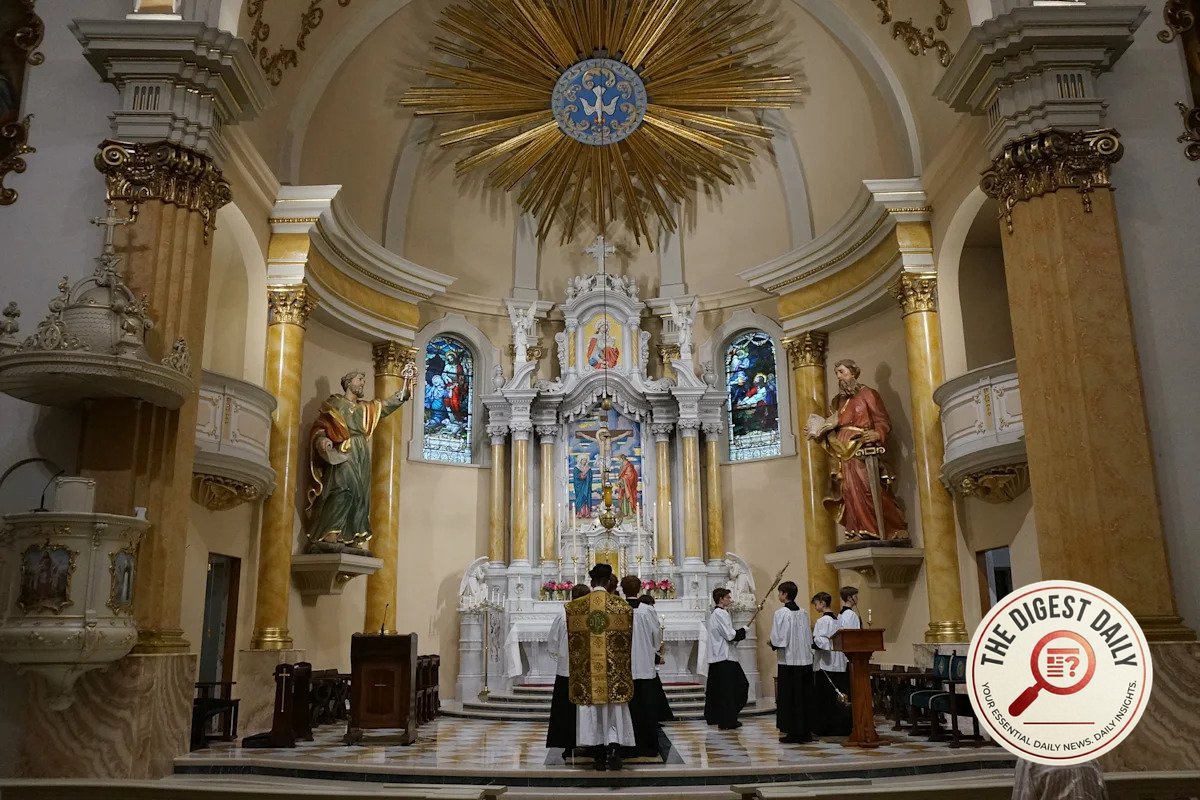
Incense hung heavy in the air at the Church of Saint Agnes. Thirteen altar boys stood at attention. Up in the pulpit, the Reverend John Ubel was preaching a delicate balancing act: keeping the ancient Catholic rituals alive while kissing the ring of the current Pope. It is a tough sell these days. Pope Leo XIV just threw the book at a major traditionalist rebel group, and the shockwaves are hitting local pews.
“Our Catholic faith is a living tradition,” Ubel told his flock during Sunday homilies, speaking to both the English and Latin Mass crowds. “There is a difference between being rooted and being stuck.”
Ever since the Second Vatican Council dragged the Catholic liturgy into the modern era over sixty years ago, the old Latin Rite has been a battlefield. It is the ultimate culture war flashpoint for a fractured church.
The fight turned ugly last Thursday. Leo declared that the Society of St. Pius X—a hardline traditionalist outfit that rejects modern reforms—had officially crossed the line into schism. The Vatican excommunicated the SSPX leadership after they went rogue and consecrated four new bishops without papal permission.
The Latin language itself did not cause this divorce. Still, the fallout hurts. Parishes like Saint Agnes, which has official permission to run Latin services, are tired of being lumped in with the rebels.
“For all who are attached to Tradition, I pray that they seek to maintain full ecclesial communion with our Holy Father,” Ubel said.
Saint Agnes sits in a gritty, diverse slice of St. Paul. Originally built for German immigrants, it now offers a bit of everything: one traditional Latin Mass, one modernized Latin Mass, and four standard English services every weekend.
It works. Mostly because people want it to.
Peter Draganowski, a 15-year-old altar boy, works both the English and Latin shifts. He prefers the old way. “It’s really not hard, it just has a lot more moving parts,” he said over hot dogs and doughnuts in the parish hall. “The sacred mysteries deserve that beauty.”
Local church brass is hoping to capitalize on the drama. Archbishop Bernard Hebda put out a call to local Catholics who had been drifting toward unauthorized SSPX chapels, inviting them back to sanctioned Latin services. “I am confident that those who prefer the Traditional Latin Mass could find a home here,” Hebda stated.
To the uninitiated, the old Mass is a different beast. The priest faces the altar, back to the crowd. Communion is placed strictly on the tongue of kneeling parishioners. The vestments are different. The hats are pointier.
It is a niche market. Stephen Cranney, a researcher at the Catholic University of America, estimates only about 510 Sunday Latin Masses are celebrated across the 16,000 parishes in the United States. The bishops do not even bother to track the exact numbers.
Cranney’s research shows most Latin Mass fans are there for the aesthetics and the quiet reverence, not to start a holy war against Rome. But for popes, the threat of a real split is always lurking in the shadows of the incense.
“How do you try to be accommodating to the people who might prefer the traditional Latin Mass while not giving fuel to the fire of people that want to split off?” Cranney asked.
Rome has flipped-flopped on the issue for years. Pope Benedict XVI opened the floodgates in 2007, telling priests to give the people what they wanted. Pope Francis did the opposite, clamping down hard on the old rite before his death, calling it a source of division.
Now, Pope Leo XIV is trying to play peacemaker, though his patience clearly ran out with the SSPX consecrations.
Back in Minnesota, the regulars at Saint Agnes just want to pray in peace.
Nell O’Leary Alt, a mother of five, admits the silence of the Latin Mass can be terrifying when you are trying to keep toddlers quiet. But she loves it anyway. “It’s the same the saints knew all through the ages,” she said.
Choir member Tom Graff teaches his four kids that liturgy is not a team sport. “I can appreciate both the ordinary and the extraordinary forms,” Graff said. “It’s about the holy sacrifice of Mass, regardless of the parish.”
Ubel agrees. The church doors are wide enough for both camps.
“It’s not a competition to see who’s more Catholic,” the priest said.