
For generations, fresh graduates have been guided to meticulously chart their professional trajectories: select a profession, outline promotions, and precisely define their aspirations for the next decade. However, former Facebook executive Sheryl Sandberg contends that this conventional wisdom is dangerously obsolete.
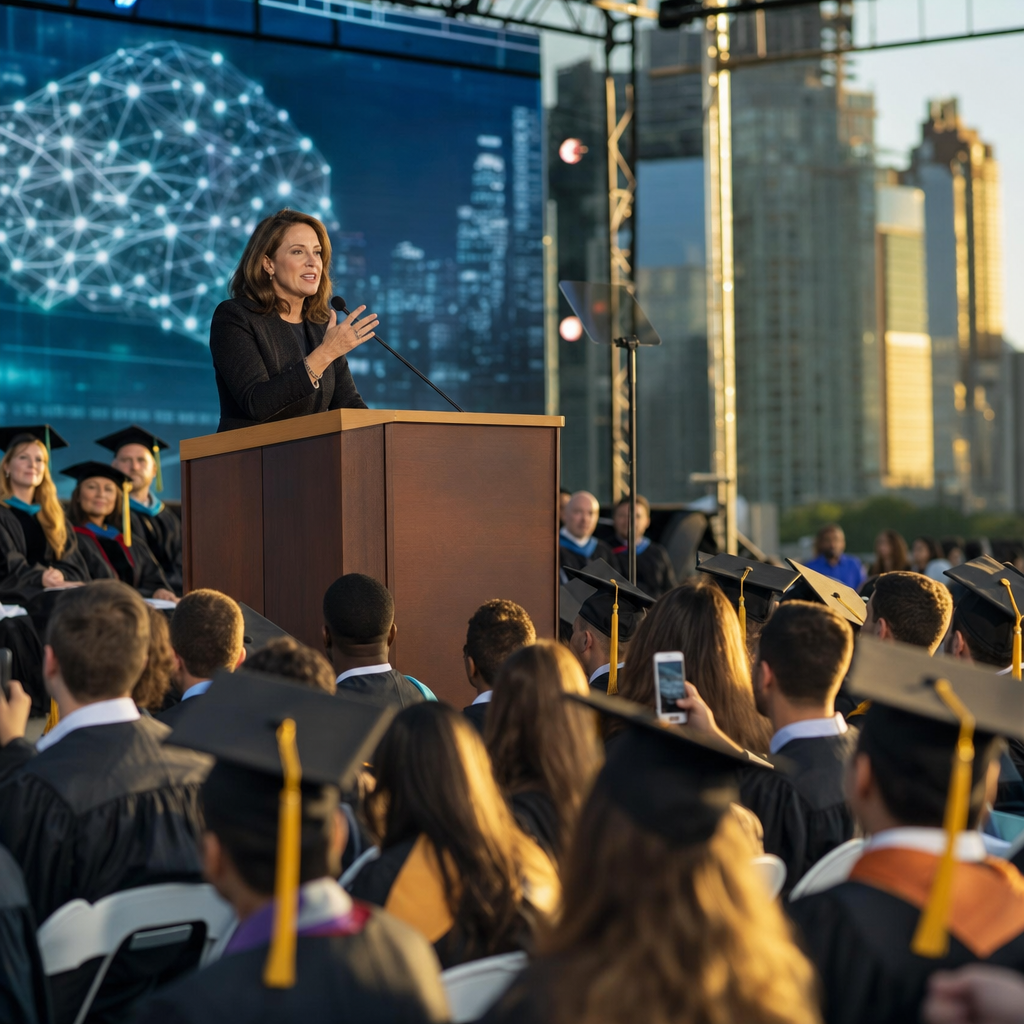
“Do not rigidly plan your career when the future remains unpredictable,” the former chief operating officer of Meta recently told graduates at Brandeis University. “A 10-year strategy is unnecessary. Had I adhered to one, I would have overlooked the internet’s advent.”
Sandberg, who ascended to become one of Silicon Valley’s most influential figures, understands firsthand the inclination to cling to a rigid framework when the employment landscape appears precarious. She also vividly recalls entering the professional world during a period of monumental technological transformation.
Graduating from Harvard in 1991, the internet as we recognize it was nascent; the World Wide Web had just been conceived and would not be publicly released for another two years.
Following her academic pursuits, she served in the Treasury Department under President Bill Clinton. Yet, upon the administration’s conclusion, she encountered significant difficulty securing her subsequent role.
“There were days—and I am not exaggerating—when I believed I would never find employment,” she elaborated. “When I finally received an offer, I was concerned that the company might not even endure.” That company was Google.
Naturally, it has since evolved into one of the globe’s most valuable enterprises, with Google currently boasting a $4.7 trillion market capitalization. Sandberg greatly benefited from her early involvement, expanding its sales division from four individuals to 4,000, before famously becoming Mark Zuckerberg’s principal aide. None of this could have been preconceived. The enabling technology—and the subsequent roles it would generate—simply did not exist yet.
“I wish someone had told me during those many months of apprehension that a rigid plan was never the safeguard,” she reflected.
Her message to Generation Z is clear: In an employment market being disrupted by artificial intelligence, where the positions today’s graduates pursue could drastically change (or vanish entirely) within a few years, attempting to predetermine their future is not merely futile. It risks causing them to miss life-altering opportunities.
“You don’t require a 10-year plan,” she concluded. “You need two elements: a short-term trajectory, an immediate objective to strive for, and a long-term aspiration, an understanding of the life you endeavor to construct.”
“Do not attempt to connect those two points,” she continued. “The journey will present surprises, and these surprises hold the potential for opportunity.”
Sandberg’s counsel arrives at a particularly anxious time for young professionals. Gen Z graduates are entering a job market undergoing a complete overhaul due to AI.