
Hype is funny. You can buy a chunk of the series, plaster ads all over the NFL playoffs, and broadcast your daily talking-head shows right from the grease-stained asphalt. You still can’t force people to watch. Fox learned that Sunday.
The 110th running of the Indianapolis 500 averaged 6.635 million viewers on Fox. It sounds like a crowd. It isn’t. Not compared to last year. That is a six percent slide from the 7.05 million who tuned in during Fox’s debut broadcast. Even a historic finish didn’t save the average.
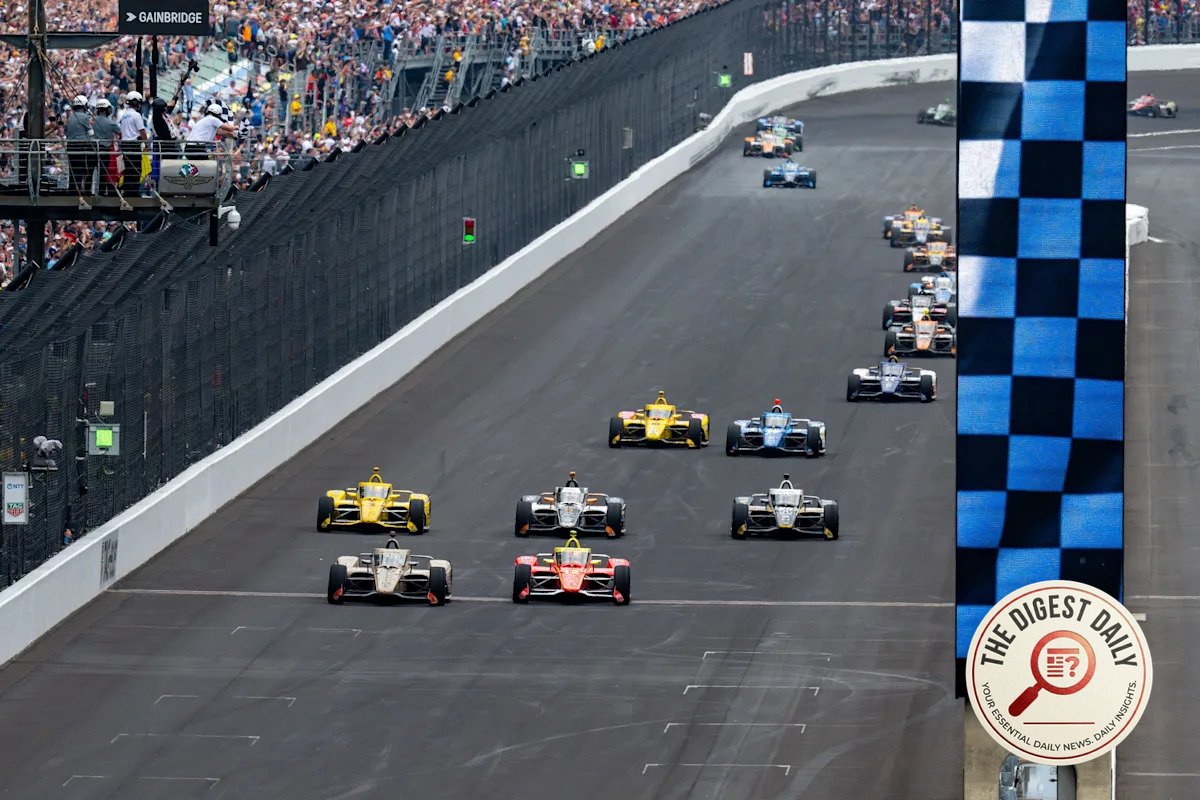
Those who stayed tuned saw something special. Felix Rosenqvist edged out David Malukas by a microscopic 0.0233 seconds. It was the closest finish in the history of the Brickyard. During that final mad dash between 4:00 and 4:15 p.m., viewership peaked at 8.349 million.
They had every advantage. The local blackout in central Indiana was lifted again because the track sold out its massive grandstands—more than 230,000 seats. No local TV blackout meant more local eyeballs. Still, the needle moved backward.
It’s not for lack of trying. Fox is deeply invested. Literally. Last summer, the network bought a one-third stake in Penske Entertainment, IndyCar’s parent company. Suddenly, IndyCar was everywhere. They hyped the race during postseason football games. They used the World Baseball Classic final to announce Indiana University football coach Curt Cignetti as the pace car driver. They even dragged their studio shows to Indianapolis to broadcast live.
All that noise for a slide.
But let’s be fair. Fox executives aren’t jumping off the ledge. They have put every single race on network television over the last two seasons, bypassing the cable and streaming paywalls NBC favored from 2019 to 2024. It worked. Mostly.
Season-wide, Fox is averaging 2.383 million viewers through seven races. That is a ten percent jump from last year. Plus, both of Fox’s Indy 500 broadcasts have outdrawn anything NBC managed during its entire five-year run. In fact, Sunday’s race was the second-most-watched since ABC pulled in 6.851 million back in 2012.
So, is the glass half full? It depends on who is spinning the numbers. But in the boardrooms, they expected a climb, not a dip. Turns out, even the greatest spectacle in racing can’t outrun the reality of modern television.