

War is a meatgrinder. Breaching enemy lines is the absolute worst part of it. Traditionally, you send young engineers crawling through the mud with explosives, praying they don’t get vaporized by pre-sighted artillery. But during a recent exercise at Fort Polk, Louisiana, one US Army company commander decided to let cheap plastic and C4 take the beating instead.
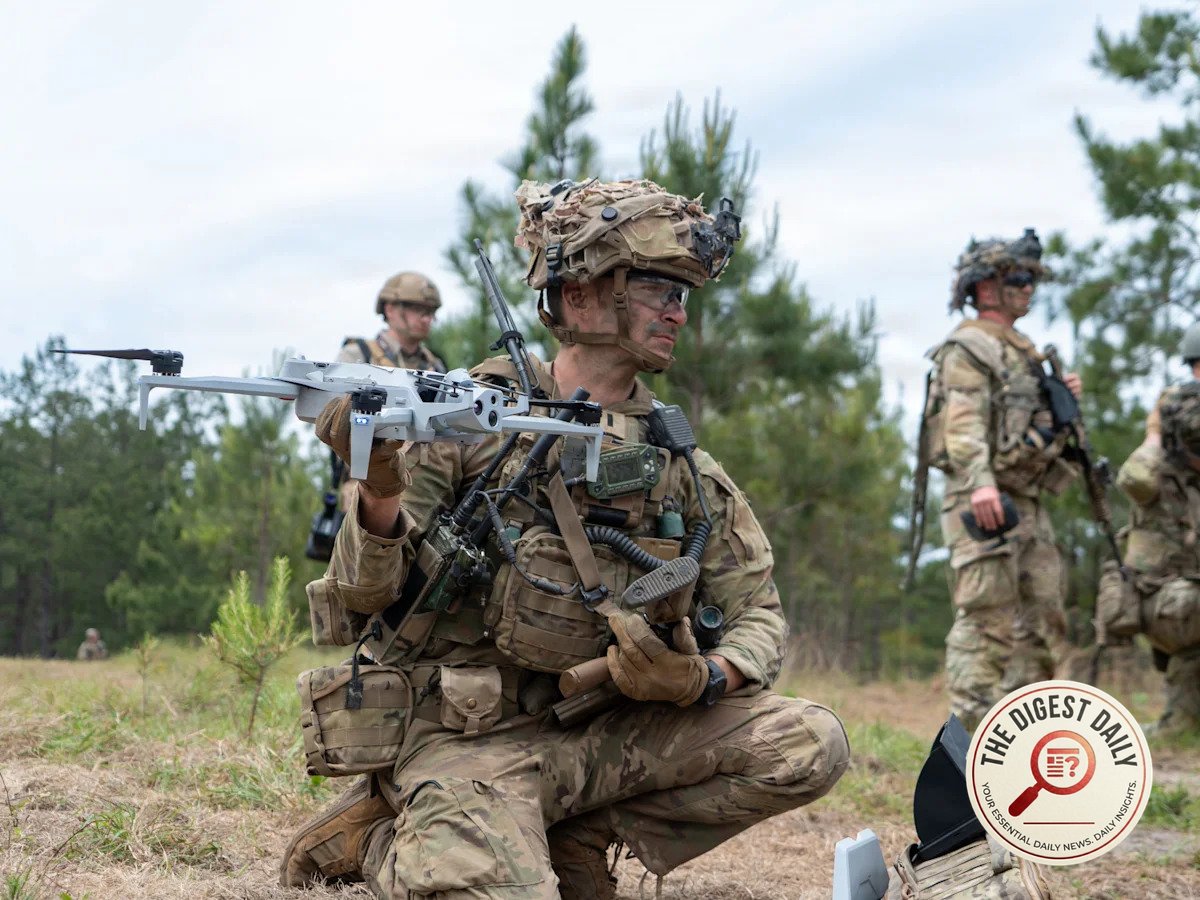
It worked. The 3rd Mobile Brigade Combat Team sent a swarm of 25 home-brewed attack drones screaming into enemy positions. They targeted machine gun nests, bunkers, and concertina wire. Some carried smoke canisters to blind the defenders. Others hunted down electronic warfare jammers. Once the air cleared, two remote-controlled ground vehicles packed with 100 pounds of C4 rolled in to finish off the landmines.
No human blood was spilled. When the infantry finally arrived, the breach was wide open. Col. Ryan Bell, the brigade commander, summed it up bluntly. It took 35 drones and some explosives. The cost? Less than three standard 155mm artillery barrages. No Sappers had to low-crawl with Bangalore torpedoes. It was an unfair fight. Exactly how the military wants it.
This is the “drone contact layer” in action. Let the machines absorb the initial violence. The troops assembled these cheap, expendable flyers themselves using 3D-printed parts and off-the-shelf components. The brigade also experimented with artificial intelligence, using a bot to digest 25,000 battlefield reports to map the environment. But don’t expect Silicon Valley to run the whole show just yet. Bell noted that large language models are useless at understanding three-dimensional space. They can’t plan a real battle. For now, you still need human brains to orchestrate the slaughter.