
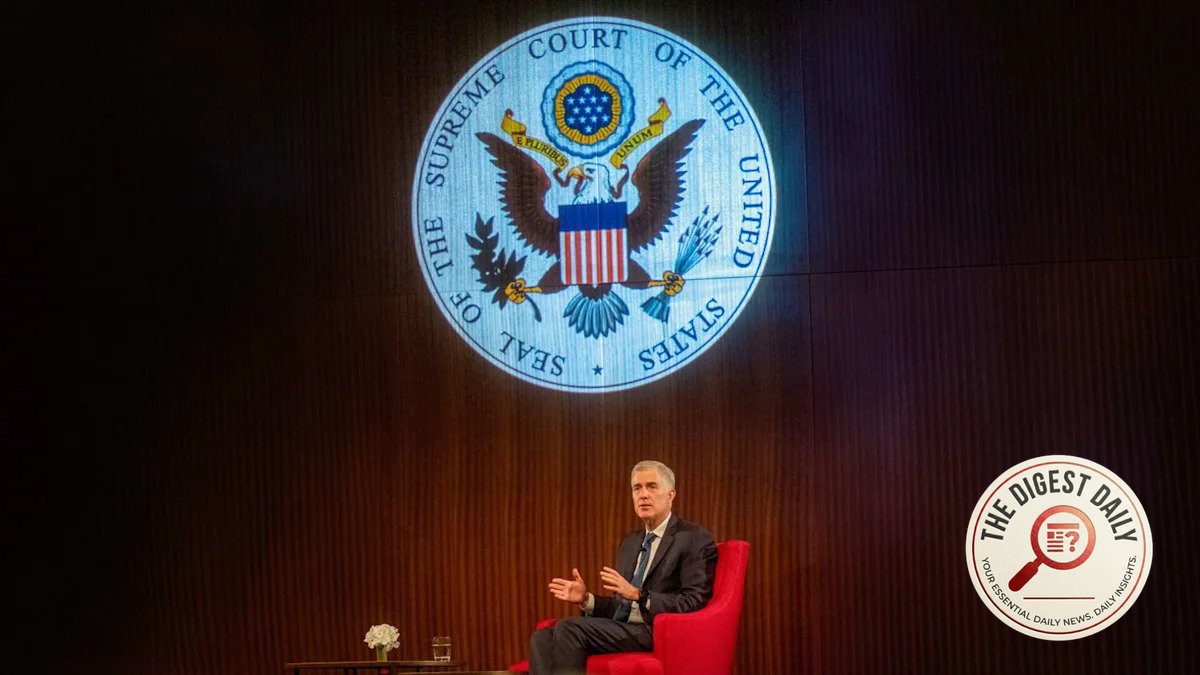
The Supreme Court loves a band-aid. Recently, the high court handed down two decent rulings. First, they decided you can’t force a guy to waive his right to appeal if it leads to a “miscarriage of justice.” Second, they ruled that cops snooping through your Google location data via “geofence” warrants counts as a real search under the Fourth Amendment. Good news, right? Sure. But Justice Neil Gorsuch isn’t celebrating. He sees the rot underneath.
Gorsuch agreed with the outcomes. Obviously. But he wrote his own opinions to point out the giant, systemic elephants in the room that his colleagues preferred to ignore. Take the first case. Munson P. Hunter III pled guilty to wire fraud. The feds gave him four years, plus a lovely parting gift: mandatory psychiatric drugs upon release. Hunter objected. He didn’t want forced meds. Too bad, said the 5th Circuit. He had signed away his right to appeal. Standard plea deal stuff.
The Supreme Court stepped in. They said forced drugging is a bridge too far. Gorsuch went further. How can anyone “knowingly” waive an appeal before they even know what crazy conditions a judge might invent? He didn’t stop there. He took aim at the entire system. “In our times, the jury trial has given way to a conveyor belt of plea bargains,” Gorsuch wrote. It is a racket. Ninety-five percent of felony convictions never see a jury. Prosecutors threaten massive sentences to force pleas. The Founders would vomit. Yet, the Court usually just shrugs.
Then came the tech case. Virginia cops used a geofence warrant to shake down Google for location data to catch a bank robber. The majority ruled this was a search. But they did it using the “reasonable expectation of privacy” test. This test was cooked up in 1967. Gorsuch hates it. It has no basis in the Constitution. It is vague. It is vibes-based.
It gets worse. In 1976, the Court decided that if you hand data to a third party, you lose your privacy rights. That is the third-party doctrine. It is a disaster in the digital age. Google has everything. Under the old rules, the government could just take it. The majority blinked at that reality in this case, but they refused to kill the bad precedent. They just danced around it.
Gorsuch wants to burn these precedents down. He wants a return to actual property rights. He wants an end to the plea-deal conveyor belt. Will his colleagues listen? Don’t hold your breath. Fixing judicial screw-ups is an agonizingly slow business. But someone has to point out the wreckage.