
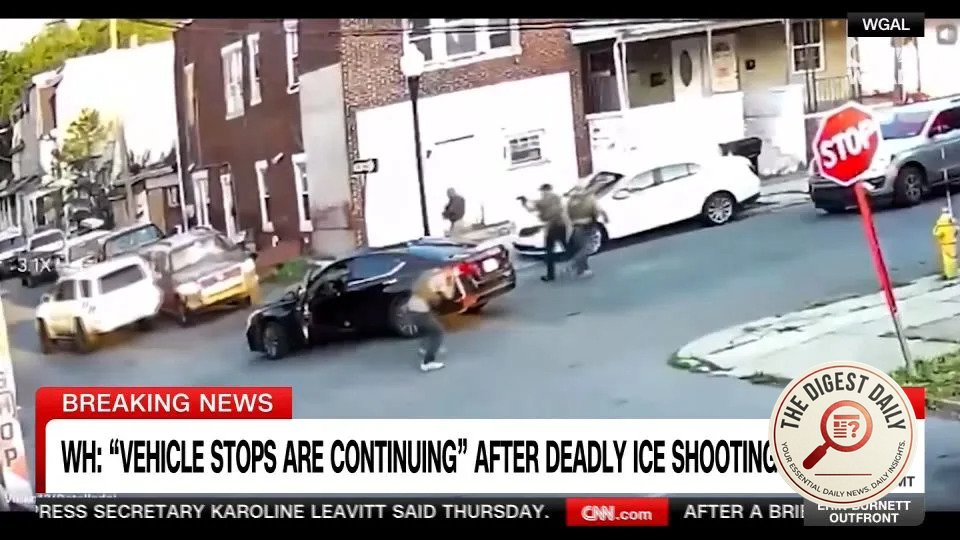
It started with a white SUV in Harrisburg, Pennsylvania. Early morning, July 1. Federal immigration agents boxed it in. One unmarked ICE vehicle parked in front, others squeezed from behind. Standard trap, or so they thought. Surveillance footage tells a messier story.
An agent approached. “Get out of the car now,” he yelled. The driver sat tight. No movement. An officer smashed the window. That’s when the driver panicked, hit the gas, and squeezed past the blockade. He clipped the ICE car, turned down a one-way street the wrong way, and fled. An agent opened fire. The SUV crashed into a parked car. The driver got away anyway.
ICE spun it immediately. They claimed the driver—a man with a record of assault and domestic violence—”weaponized” his vehicle and rammed them. But the tape doesn’t lie. Kenneth Corey, former NYPD chief of department, watched the video. He wasn’t impressed. “He takes a little sideswipe damage, but he doesn’t ram his way out,” Corey said. The blockade was sloppy. The tactics were amateur.
This isn’t an isolated screw-up. It’s a pattern. Days after Harrisburg, an ICE agent shot and killed a 52-year-old man during a car stop in Houston. Less than a week later, another agent killed a 25-year-old in Maine. Neither victim was the actual target of the operation. Innocent people are dying. The public is furious.
After the Maine tragedy, the agency briefly paused vehicle stops. It didn’t last. President Donald Trump, obsessed with his 2,000-arrests-a-day quota, immediately vetoed the pause. Mass deportation is the goal. Safety is an afterthought.
ICE wasn’t built for this. Historically, agents picked up targets quietly. They went to local jails, homes, or workplaces. Now? They are playing street cops. But they lack the street-level training. “They didn’t really try to pick people up off the street the way they are now,” Corey noted. It is a recipe for disaster.
Basic academy training doesn’t stick forever. If you haven’t done a high-risk traffic stop in a decade, you forget. Worse, the administration previously slashed training days for new recruits. ICE agents already get less training than almost any other armed federal officers. DHS claims they are fixing this, promising to restore a 71-day training program. Too little, too late.
Local police train constantly for traffic stops. They know the rules. Rule number one: don’t block the front of the car. It puts officers in the line of fire. “Those officers in the front car are in a terrible, terrible tactical position,” Corey said. If the suspect drives at you, you get out of the way. You don’t shoot.
Shooting at a fleeing car is a cardinal sin in modern policing. Hit the driver, and you have a two-ton unguided missile hurtling down a public street. DHS policy technically forbids shooting just to disable a vehicle. Yet, the Harrisburg agent fired as the SUV sped away. “Was anybody at risk of serious physical injury or death? And the answer is no,” said Rodney Harrison, another former NYPD chief. It was a bad shoot.
In Houston, ICE claimed self-defense. In Maine, they claimed “fear for public safety.” But there is a catch. None of these agents wore body cameras. We are forced to take the word of an agency caught lying by surveillance cameras in Pennsylvania. No criminal charges have been filed. The system protects its own. But as long as untrained agents play traffic cop to meet political quotas, more blood will spill on the asphalt.