

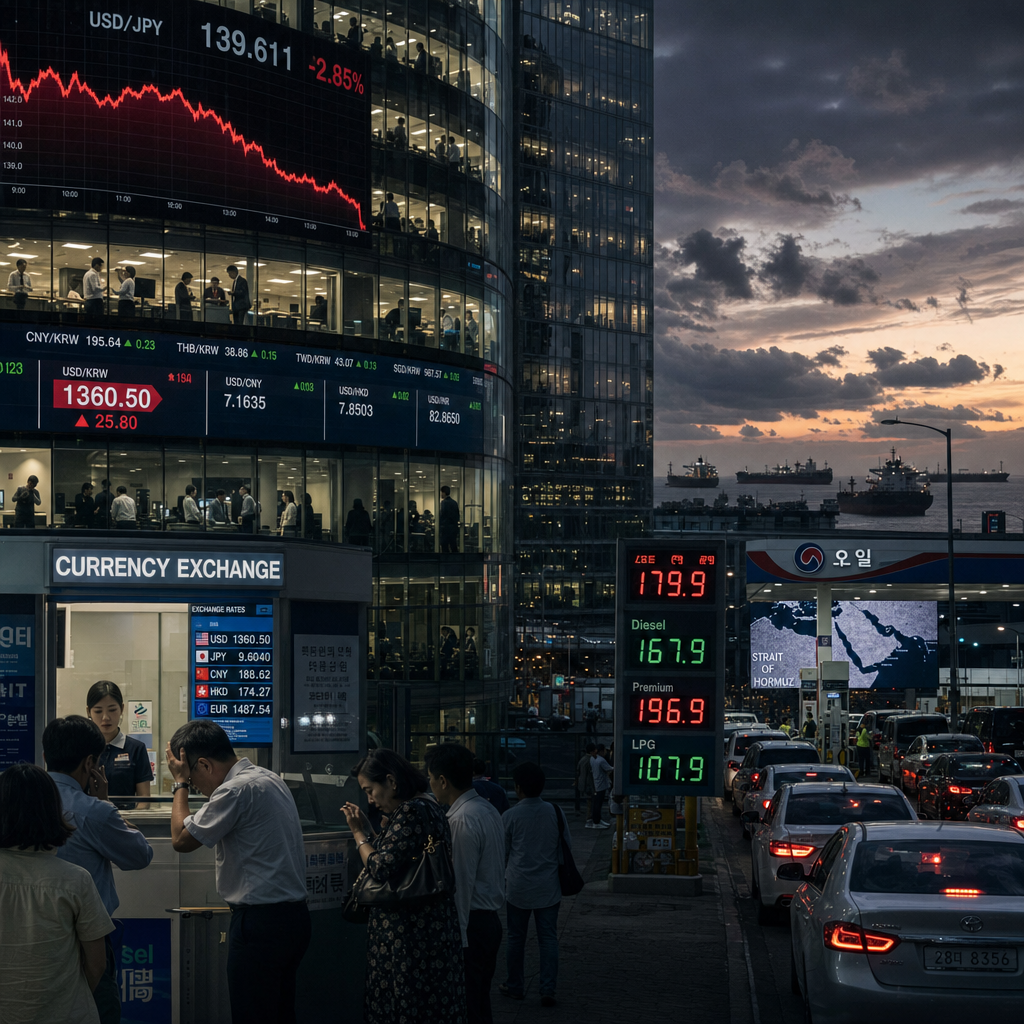
Asian policymakers are resorting to increasingly urgent and unconventional measures to fortify their economies, which are on the front lines of a global energy supply disruption. Currencies in the region are plummeting to unprecedented lows, compelling central banks to implement interest rate hikes.
Asia accounts for roughly 80% of the oil transported through the Strait of Hormuz. The turmoil in foreign exchange markets clearly indicates that escalating fuel prices are beginning to impede economic expansion. Governments find themselves in a precarious situation: while currency depreciation can erode confidence and fuel inflation, supporting these currencies through higher interest rates risks harming consumers and stifling economic growth, compounding the impact of the energy crisis.
India has urged its citizens to curtail international travel and defer gold purchases to safeguard the rupee, which has been among the world’s weakest currencies since the Middle Eastern conflict disrupted crude oil supplies. A government insider informed Reuters that Prime Minister Narendra Modi has reduced the size of his motorcade to conserve fuel. Meanwhile, bankers estimate the central bank is spending $1 billion daily to bolster the struggling currency, which is trading at historic lows. These sources requested anonymity as they were not authorized to speak publicly.
Indonesia surprised markets with a 50-basis-point rate hike to strengthen the rupiah, which is also at record lows against the dollar. The nation also imposed control over commodity exports to ensure proceeds remain onshore and in local currency. The Philippine central bank has already raised rates, and discussions are circulating about a potential out-of-cycle hike before the next scheduled meeting in a month, driven by surging inflation.
Navin Saigal, head of global fixed income for Asia Pacific at BlackRock, commented on the situation, questioning how many rate hikes would truly incentivize capital inflow. He noted that the answer could be “quite a lot,” but also posed the question of the significant impact these hikes could have on the domestic economy. India, Indonesia, and the Philippines are particularly vulnerable as they are oil importers simultaneously experiencing capital outflows as investors reallocate funds.
A sudden shift in U.S. interest rate expectations, with a potential hike this year, has intensified the pressure. This has pushed the rupiah to 17,700 per dollar, the rupee close to 97 per dollar, and the peso near 62 to the dollar. The growing apprehension regarding money flows is creating a hostile environment within financial markets.