

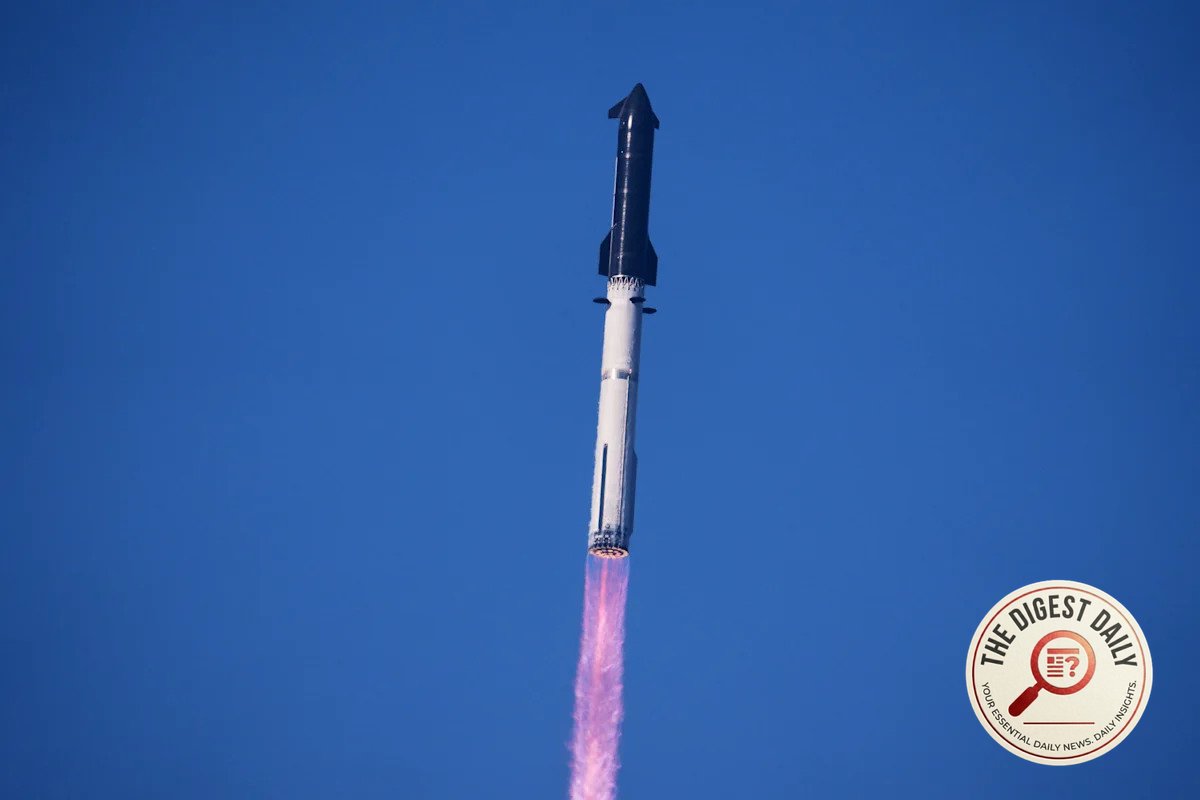
SpaceX just hurled its monstrous metal tower into the sky again. The 407-foot Starship roared out of South Texas on Friday, carrying 20 high-tech Starlink satellites on a half-world trip. NASA watched closely. They need this giant tin can to land astronauts on the moon eventually, so every scrap of data matters.
It actually survived the plunge. The hour-long flight ended with the spacecraft bobbing upright in the Indian Ocean, a soft landing that sparked wild cheers back at mission control. It was a massive relief. Just last week, the launch aborted at the final second because six of the booster’s 33 engines refused to fire. SpaceX swapped them out. This time, all 33 roared to life at liftoff. But the booster still had issues. Not enough engines relit for the return trip, sending the booster screaming down too fast to smash into the Gulf of Mexico.
The main ship kept going. It climbed 124 miles high, spitting out the new Starlinks before screaming back through the atmosphere. This was flight 13. Lucky for some. Neither the booster nor the ship was meant to be saved anyway. Both were destined for a watery grave. Yet, this was the cleanest reentry yet. Instead of exploding into a fireball like previous attempts, the stainless-steel craft hovered briefly over the water before tipping in.
The satellites did their job fast. They had a mere 20-minute window to talk to each other via lasers and radio before burning up. They nailed it. Engineers even grabbed data from every single one. Six of these disposable birds carried cameras, snapping crisp photos of Starship’s belly as it took a beating. The heat shield was a patchwork of black tiles, with a few painted white to mimic missing pieces. Musk bragged on social media that they got all the data they wanted.
The stakes are high. NASA needs this machine ready for the Artemis III mission next year so astronauts can practice docking. Musk, of course, is already selling tickets to Mars. But first, they have to prove the heat shield won’t melt before they try catching the ship with giant mechanical arms in Texas. This launch was already late, delayed by last week’s abort and then by the clouds of Tropical Storm Bertha. Just another day in the billionaire space race.