

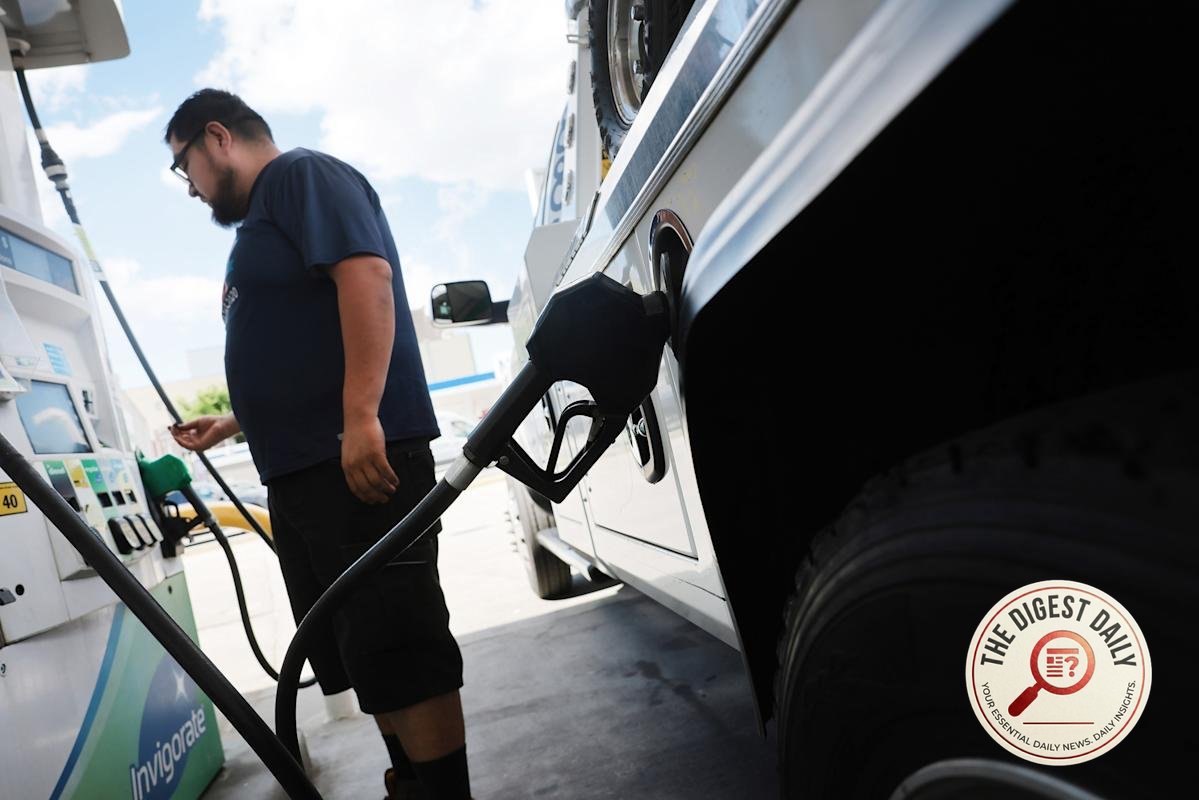
Drivers are getting a brief reprieve at the pump. Finally. The national average for a gallon of regular unleaded slid to $4.26 on Wednesday. That is a 30-cent drop—about 6.5%—since the peak on May 21. Do not pop the champagne. We are still paying way more than the sub-$3 average we saw in late February before geopolitical madness broke the energy market.
Why the sudden dip? Blame a post-Memorial Day demand slump and a temporary cooling of crude prices. The ongoing conflict with Iran has choked global supply ever since Tehran effectively blocked the Strait of Hormuz. That narrow strip of water handles a fifth of the world’s crude. When it closed, prices spiked. Now, things are shifting.
Crude prices tumbled to around $86 a barrel last Friday, a 20% plunge over ten days. Why? Rumors of a deal. The Biden administration hinted at a potential agreement with Iran to reopen the shipping lanes. Crude accounts for over half of what you pay at the pump. Ramanan Krishnamoorti, a petroleum engineering professor at the University of Houston, noted that the drop is directly tied to these diplomatic whispers. But whispers are cheap.
Where you live dictates your pain. Georgia drivers are laughing with a $3.79 average. Six states are currently sitting under the $4 mark. Then there is California. Golden State drivers are coughing up $5.99 a gallon. Even there, prices dropped a dime last week. Small victories.
The future remains incredibly murky. If the diplomatic talks fail, expect pain. Some analysts warn we could see $5 a gallon by next month. “It’s so volatile,” says Patrick Penfield, a supply chain professor at Syracuse University. He points out the obvious: if the war ends, prices drop; if it drags on, they climb.
The U.S. actually produces more oil than it consumes. We are a net exporter. It does not matter. Oil is a global commodity, and local pumps are chained to international chaos. Keep your tank half full.