
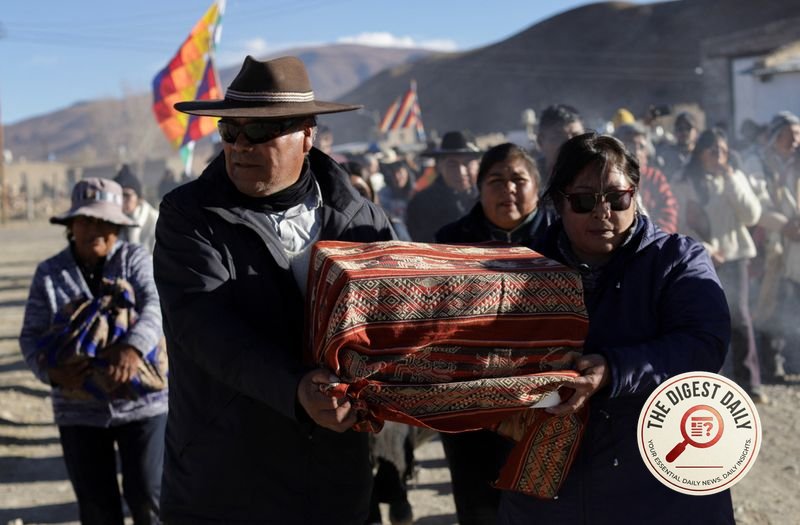
Science finally blinked. After 119 years of gathering dust in a Buenos Aires museum, the frozen mummy of an Inca child sacrificed over five centuries ago is back where he belongs. The boy, snatched from his mountain grave in 1905, was handed over to the Kolla indigenous community this week.
They call him the “Child of Chañi.” He was only five to seven years old when Inca priests marched him up a freezing peak in Jujuy province, nearly 19,400 feet above sea level, to die. It was “capacocha”—a state-sanctioned ritual sacrifice to appease the gods. Then, the ice took him.
Soldiers and climbers stumbled upon his frozen body in 1905. Naturally, they dragged him down. For over a century, the Juan B. Ambrosetti Ethnographic Museum, run by the University of Buenos Aires, kept him on display like a trophy. The Kolla people spent decades begging for his return. Academics dragged their feet.
That ended Thursday. The boy made the long journey from the chaotic streets of the capital back to the quiet town of El Moreno. The Kolla people welcomed him with ancient rituals.
“This little boy has much to tell us about our identity,” Clemente Flores, a Kolla leader, noted. To them, he is not a specimen. He is an ancestor.
Even the suits at the university felt the shame. During the handover, Ricardo Manetti, dean of the university’s philosophy department, offered a rare apology for the century-long delay. “Not everything is in pursuit of science,” he admitted. Better late than never, I suppose.
His final resting place remains undecided. For now, he is out of the display case.