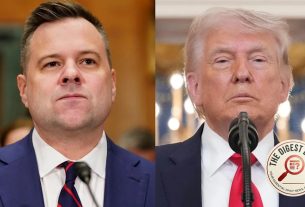


President Donald Trump is set to visit a competitive congressional district in New York to champion his tax policies, specifically highlighting the quadrupling of the federal deduction for state and local taxes, a significant provision for high-tax states like New York. This outreach comes at a time when public opinion on his economic management is largely negative.
Meanwhile, international relations remain a complex area for the administration. European allies are expressing confusion following Trump’s recent announcement to deploy an additional 5,000 troops to Poland. This directly contradicts earlier signals from his administration regarding a potential reduction, rather than an increase, in the American military presence abroad. Concurrently, efforts by Republicans to garner sufficient support to continue backing the administration’s military involvement with Iran are facing considerable challenges in Congress.
In related developments, the United States has authorized a modest $108 million arms deal for Ukraine. This sale will provide ground-to-air Hawk missile components, spare parts, and logistical assistance, aiming to bolster Ukraine’s air defense capabilities against current and future threats. This move is intended to enhance Ukraine’s ability to conduct self-defense and regional security missions with a more integrated air defense system. This arms sale follows a period of reduced military aid to Ukraine over the past 18 months, as the administration sought to mediate a resolution to the conflict with Russia.
Domestically, congressional Republicans have postponed a vote on a war powers resolution concerning Iran. The legislation, introduced by Democrats, sought to curtail the President’s military actions. The delay was prompted by the realization that Republicans lacked the necessary votes to defeat the measure. This signals growing congressional unease with the administration’s military campaign, initiated over two months ago without explicit congressional approval. Similar struggles are evident in the Senate, where Republicans are working to secure votes against another war powers resolution that recently advanced, following support from several GOP senators.
Allies in NATO, including Sweden’s Foreign Minister Maria Malmer Stenergard, have voiced perplexity regarding the shifting U.S. troop deployment strategies in Europe. U.S. defense officials have also admitted to being confused by the latest announcements, which come after weeks of differing statements on troop levels. Despite prior assurances from NATO’s top military officer, U.S. Lt. Gen. Alex Grynkewich, that coordination with allies would be maintained, these changes have seemingly taken European partners by surprise. The lack of clarity is particularly pronounced given previous discussions about reducing troop levels in Germany following criticism from Chancellor Friedrich Merz regarding the administration’s approach to the conflict with Iran.