

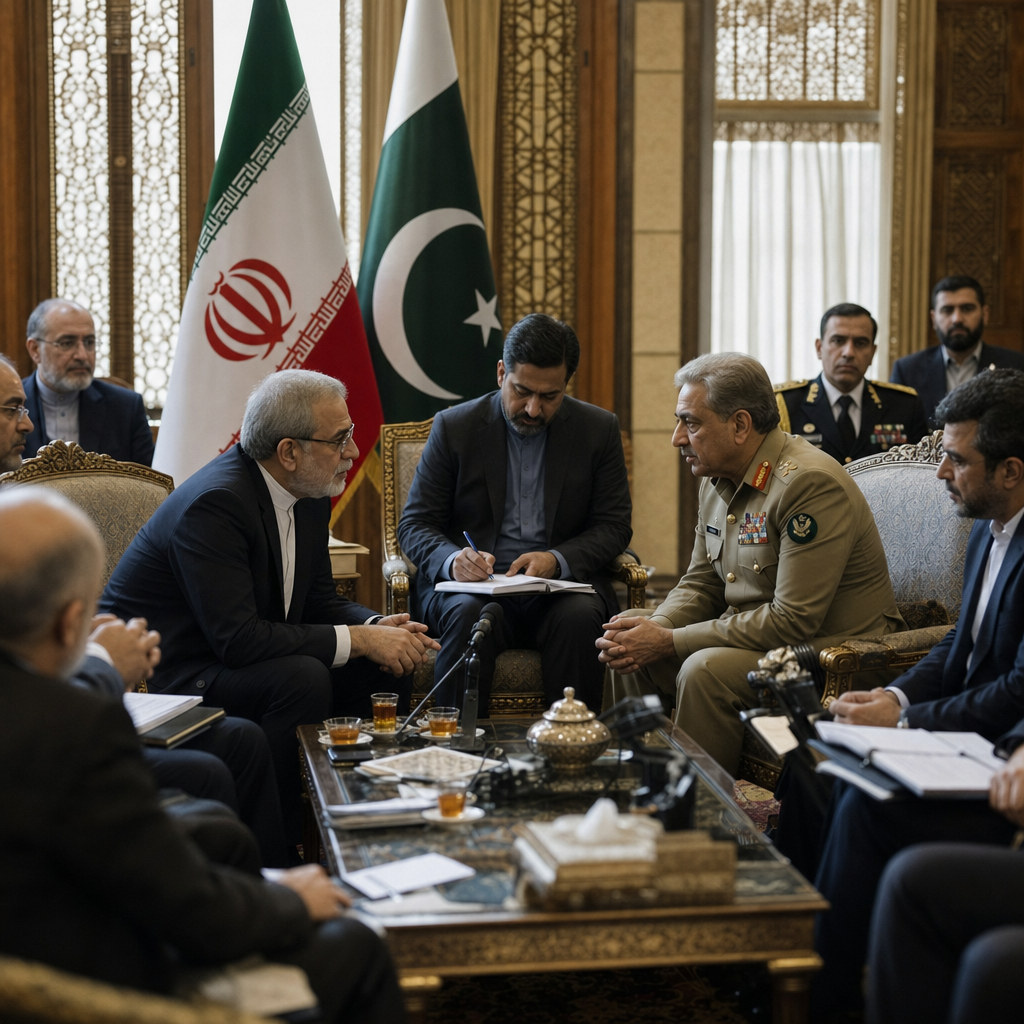
Mohammad Baqer Qalibaf, Iran’s chief negotiator and Parliament Speaker, informed Pakistani army chief Asim Munir during discussions in Tehran on Saturday that the United States could not be considered a reliable partner in resolving their conflict. Qalibaf emphasized that Iran would not concede on its national sovereignty, according to reports from state television.
Pakistan is leading a regional diplomatic effort to bridge the gaps between Iran and the U.S. following weeks of hostilities that led to the closure of the critical Strait of Hormuz waterway to most maritime traffic, despite a tentative ceasefire. This situation has significantly disrupted global energy markets.
Iranian state media indicated that Munir also held meetings with President Masoud Pezeshkian, with Foreign Minister Abbas Araqchi present, before his departure. Munir reportedly had two meetings with Araqchi.
The discussions reportedly focused on a 14-point proposal put forth by Iran, which serves as its primary framework for the negotiations, along with exchanged communications between the two parties.
Qalibaf asserted that Iran intends to uphold its “legitimate rights” through both military and diplomatic channels. However, he also stated that Iran cannot trust “a party that has no honesty at all,” an accusation previously leveled by Iran on multiple occasions.
He further claimed that Iran’s armed forces have bolstered their capabilities during the ceasefire period, warning that if the United States “foolishly restarts the war,” the repercussions would be “more forceful and bitter” than the initial phase of the conflict.
On Friday, Secretary of State Marco Rubio acknowledged some progress toward an agreement but indicated that further effort was necessary. Conversely, Iran’s foreign ministry maintained that substantial and profound differences persist.
Despite the protracted conflict, Iran has maintained its reserves of nearly weapons-grade enriched uranium, alongside its missile, drone, and proxy capabilities, which the United States and Israel aim to restrict.