

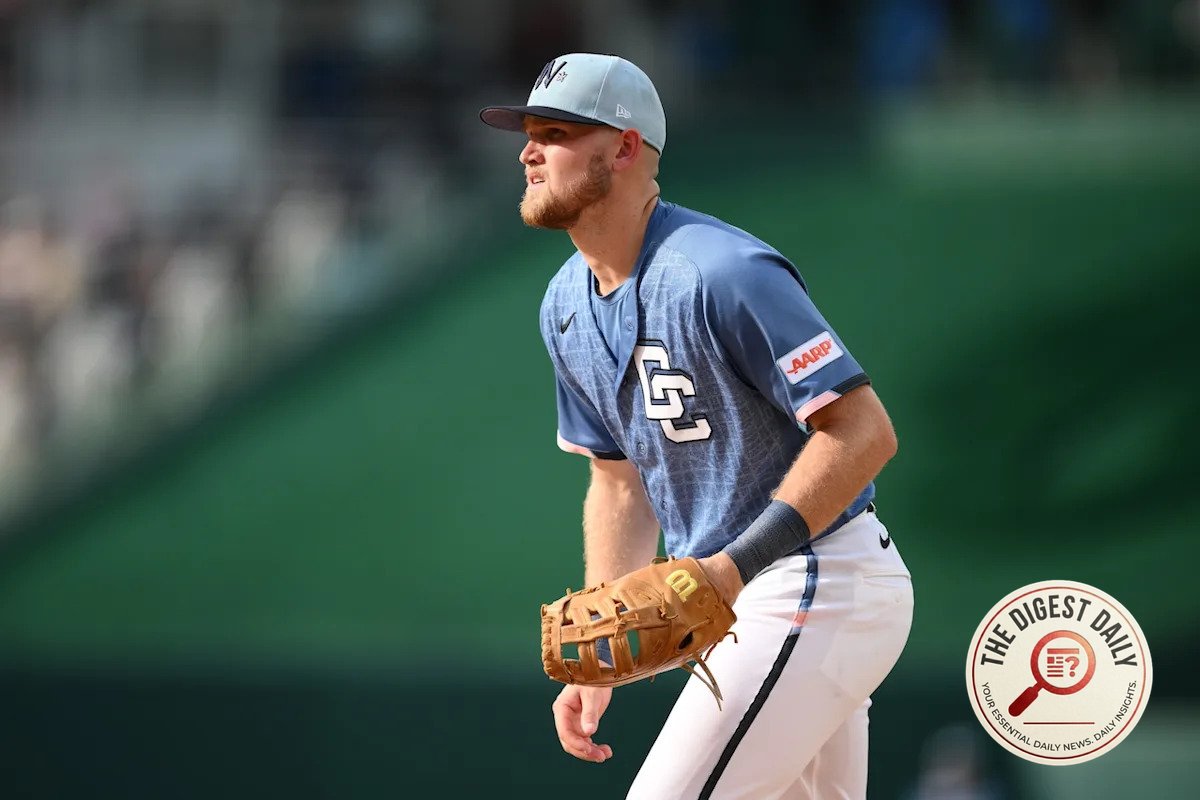
Baseball front offices usually play chicken before the trade deadline. Not Craig Breslow. The Red Sox chief baseball officer decided to strike first, sending rookie left-hander Connelly Early to the Washington Nationals in exchange for infielder Curtis Mead. It was a clean, one-for-one swap. No waiting. No games. Just a cold, calculated move to inject life into a stagnant market.
Why pull the trigger now? Simple. The Red Sox were desperate for bats. They have been since before spring training. Plus, the clubhouse earned some backup. Boston just tore through a scorching 16-of-18 stretch. But sentimentality doesn’t win pennants. Breslow wanted to make his roster better, plain and simple. He stopped trying to “win” the trade. Instead, he filled a gaping hole. Need for need. That is how modern baseball works.
Over in D.C., Nationals executive Paul Toboni wasn’t looking to move Mead, who remains under team control through 2030. Then Boston got aggressive. Toboni, a former Red Sox staffer, knew Early well. The Red Sox had pitching to spare, thanks to the rise of Payton Tolle and Jake Bennett. They leveraged that depth. It was a quick negotiation. Pitching went out. Offense came in.
Let’s look at the numbers. Boston’s pitching has been stellar, boasting a 3.57 ERA, good for fourth in the majors. They did this even with Early hurting his elbow in July. With arms like Garrett Crochet, Johan Oviedo, and Tanner Houck working their way back, Breslow felt he could spare a starter. The offense, however, is a different story. It’s an eyesore. The Sox rank 23rd in slugging and a pathetic 29th in home runs. Mead’s 17 homers instantly make him the second-best power threat on the roster, trailing only Willson Contreras.
Trading Early wasn’t easy. Breslow called it “incredibly uncomfortable.” Early was a fan favorite and a clubhouse darling. But this is a business, not a charity. If you want to fix a broken lineup, you have to trade from a position of strength. Breslow traded controllable pitching for a controllable bat. It is a gamble, but one he had to take.
The timing matters, too. By making the move now, Boston gets Mead for a crucial seven-game road trip to Sacramento and Los Angeles. Mead has had a wild year. He was DFA’d by the White Sox in March and bounced through four organizations. But the Red Sox believe in his recent swing adjustments. They see a guy who limits strikeouts, controls the zone, and hits for real power. He will likely slot in at second base immediately. It is a gamble on potential, but in Boston, standing pat was no longer an option.