

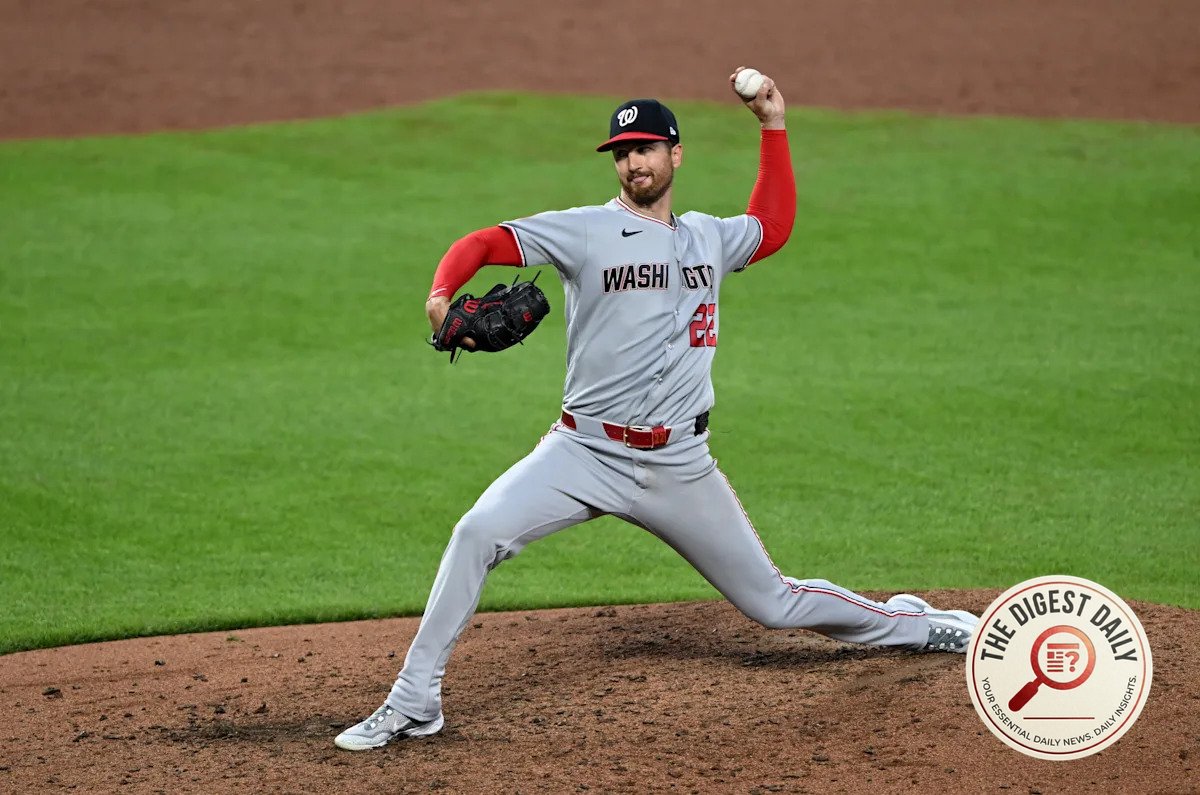
Four straight losses. The last three were absolute gut-punches. The Washington Nationals needed a savior, or at least someone to stop the bleeding before the season went entirely off the rails. Enter Foster Griffin. The lefty didn’t just step up; he dragged the team across the finish line on his back. He threw 112 pitches over seven brilliant innings. In 2026, that kind of workload is practically prehistoric. But Griffin delivered.
That $5.5 million deal to bring him back from Japan? It looks like an absolute steal. Right now, he is on track to throw nearly 190 innings with an ERA hovering under three. Early on, skeptics—myself included—figured he was just riding a wave of dumb luck. April felt like smoke and mirrors. But this stretch? This is pure, unadulterated dominance.
Manager Blake Butera clearly agrees. You don’t let a modern pitcher throw 112 pitches unless you absolutely have to. It requires two things: total faith in your starter, and complete terror of your own bullpen. We saw exactly why Butera is terrified when the eighth inning rolled around.
Usually, a guy is done when he hits 98 pitches through six. Not Griffin. Not anymore. Butera pushed him to the brink, and Griffin didn’t blink. We haven’t seen this kind of old-school grit in D.C. since Max Scherzer was stalking the mound. It is a refreshing change of pace. Butera is managing by feel, ignoring the spreadsheets because his eyes—and his gut—tell him Griffin is the only safe bet.
Sure, the nerds will point out that Griffin’s 2.93 ERA is outrunning his peripheral stats. His xFIP sits at 3.58, and his xERA is 3.89. Those are still damn good numbers, even if they suggest some regression is coming. His 4.21 FIP looks ugly, but who cares? He doesn’t walk people. He gets groundouts. He keeps the ball in the yard enough to survive.
The results speak for themselves. The Nats are 13-4 when he starts. This month alone, he put up a ridiculous 1.15 ERA over 31.1 innings. He is averaging over six innings a start. He does it without elite heat, sitting at a modest 91 mph, but his command is surgical. Thirty-three strikeouts and just four walks in June. That is a 27.5% strikeout rate against a microscopic 3.3% walk rate. Those are Paul Skenes numbers on a budget.
He probably won’t win NL Pitcher of the Month because Jacob Misiorowski is playing video game baseball. But Griffin is fighting Logan Webb for the title of best mortal pitcher in the league.
It makes you wonder. How many more Foster Griffins are hiding in Nippon Professional Baseball? Three years in Japan turned a struggling fringe guy into a command wizard with three new pitches. It is the same blueprint Erick Fedde used in Korea. Go overseas, fix your broken mechanics, and come back to exploit hitters who don’t have the scouting reports yet.
Now comes the hard part for Washington. Griffin is on a one-year deal. He is prime trade bait for a contender. But maybe, just maybe, the front office should pick up the phone and talk extension. This is the best pitching D.C. has seen in years. If he gets flipped in July, it was a fun ride. But if the Nats want to actually build something real, they need to keep their stopper around.