
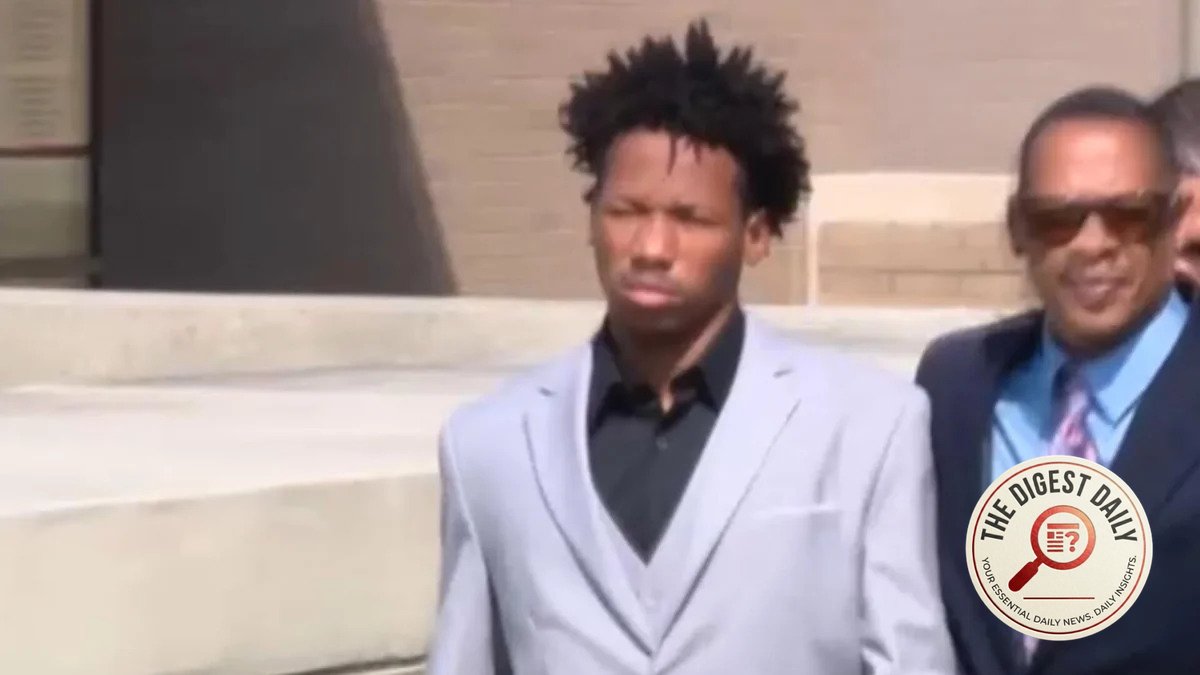
It started over a tent. A rainy spring afternoon in a wealthy Dallas suburb, a stupid turf war between teenagers, and now a 17-year-old is dead while another faces life behind bars. On Tuesday, a Collin County jury took less than three hours to reject 19-year-old Karmelo Anthony’s self-defense claim, convicting him of murder for the stabbing of rival track athlete Austin Metcalf.
The courthouse in McKinney was packed. Outside, the Texas heat hit 90 degrees. Inside, the tension was just as suffocating. When the guilty verdict came down, a woman’s grief shattered the quiet hallway. “This isn’t real!” she wailed. But it was. Very real.
The fatal clash happened in April 2025. Anthony, who is Black, was sitting under a tent belonging to Metcalf’s school, Memorial High. Metcalf, who was white, and his teammates wanted him out. Words were exchanged. Ego took over. According to witnesses, Metcalf scoffed when Anthony reached into his backpack, telling him, “You don’t have anything in that backpack. It’s Frisco.” He was wrong. Frisco is safe, until it isn’t.
“Touch me and see what happens,” Anthony warned, according to police records. Metcalf pushed him. Anthony didn’t push back. He drew a knife and drove it into the 17-year-old’s chest. A single, fatal blow.
Defense attorney Mike Howard argued his client was cornered. “Texas law does not require that you wait until you get hit,” Howard told the jury, urging them to imagine the split-second panic. But prosecutor Bill Wirskye wasn’t buying the fear angle. “You don’t get to meet a shove with a stab,” Wirskye countered. To the prosecution, it was simple. It was murder.
The internet, predictably, tried to turn the tragedy into a racial culture war. The lawyers begged to differ, telling the jury race had nothing to do with this senseless waste of life. Both boys were good students. Both had bright futures. Now, one is in the ground, and the other is waiting to hear how many decades he will spend in a cell.
Anthony’s mother, Kala Hayes, took the stand, weeping. “Please, have mercy on my son,” she begged. Wirskye, cold and pragmatic, had the final, cynical word for the jurors who will decide the sentence. “Mercy to the guilty,” he said, “is cruelty to the innocent.”