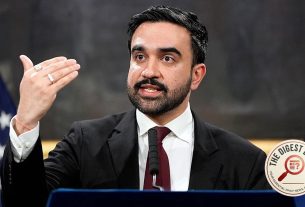

Roberto Serrano wanted to be kind. It backfired. Last spring, the Brown University economics professor watched his campus shatter. A mass shooting left two students dead. One was Ella Cook, a bright young woman who had just asked Serrano to be her academic advisor. Two others were fighting for their lives. The campus was a wreck of grief and trauma.
Serrano made a rare move. In 34 years of teaching, he had never done it. He gave his advanced mathematical economics class a take-home, closed-book midterm. He wanted to spare them the anxiety of a classroom. He wanted to help.
They repaid him with fraud. What followed was a massive AI-fueled cheating scandal.
Out of 86 students, 40 scored a perfect 100. The class average skyrocketed to 96. Normally, it hovered between 65 and 80. And this exam was intentionally brutal. Serrano noted that the beauty of take-home exams used to be the ability to challenge students a little more, to push them. Instead, the math simply did not add up.
The AI left fingerprints. ChatGPT solved one problem using a bizarre, overly complicated proof instead of a simple, elegant one. Dozens of students copied that exact convoluted logic word-for-word. It was lazy. It was obvious.
Serrano did not throw them out. Not yet. He offered a deal. The final exam would be in-person. If the grades did not align, only the final would count. He stood before his class and asked them why they were even there if they just wanted to press a button. The response? Dead silence. The cheaters probably skipped class anyway. He reminded them of the honor code. Their signatures meant nothing.
The rats fled. Twenty-seven students dropped the course immediately. Twenty-two of them had scored a perfect 100 on the midterm. When the in-person final arrived, only 59 students showed up. Nineteen failed. The average plummeted to 48. The fraud was undeniable.
Serrano took his proof to the top. He emailed the dean and the provost. Nothing. The academic code committee called it a wake-up call, but the provost stayed silent.
This is not some adjunct complaining. Serrano is a heavyweight. He holds the prestigious Harrison S. Kravis University Professorship. He literally wrote the textbook on game theory. He knows how people cheat, calculate risk, and exploit systems. Yet, the system ignored him.
Brown claims they are working on it. They hired an associate provost for AI. But Serrano sees a deeper rot. Students are paying for the brand, not the education. If the brand produces mediocrity, the market will eventually notice. He warns that if workers just press a button to let AI do the work, humanity has chosen to become idiots. We are outsourcing our brains.
The rot is everywhere. Princeton just killed its 133-year-old unproctored exam tradition. Harvard seniors admit to rampant cheating. Over half of US college students use AI weekly. We are witnessing a massive cognitive decline.
Serrano is done playing nice. No more take-home exams. Homework now counts for zero percent of the grade. If you want to pass, you have to show up and prove you actually know something. It is a grim end to an era of trust.