

They stumbled inside.
While executing a routine search warrant on an unrelated matter in the impoverished, forgotten hills of Vinton County, Ohio, authorities discovered sixteen children living in a squalor so profound it defies basic human decency. The scene was grim. Human waste littered the floor, and the victims had spent the better part of four years crammed into a single twelve-by-twelve-foot room.
Some couldn’t speak. One disabled eighteen-year-old couldn’t even write her own name. Vinton County Sheriff Ryan Cain didn’t mince words, noting that local farmers treat their livestock with far more dignity than these children received.
The system failed to notice because the system didn’t know they existed. None of the kids went to school. The family—expert at dodging paper trails—had drifted across southern Ohio for two decades, leaving no medical or government records behind, effectively erasing sixteen human beings from the grid.
Neighbors saw nothing. Joseph Stewart, who lives just three doors down the quiet, tree-lined road in Hamden, never saw a single child. The house sat right there, visible from the street, yet completely invisible.
Four adults are jailed. Gary Siders Jr., Gary Siders Sr., Christina Siders, and Elizabeth Siders face second-degree felony child endangerment charges. A judge set their bonds at $300,000 each. They don’t have lawyers yet.
The rescue was brutal. Nine kids ended up in Columbus hospitals, two flown by helicopter, one fighting for life in critical condition. Ohio Attorney General Andy Wilson described them as looking like ‘feral animals.’ It is a grim echo of the infamous Turpin family case in California, where parents starved and shackled thirteen children before one managed to escape.
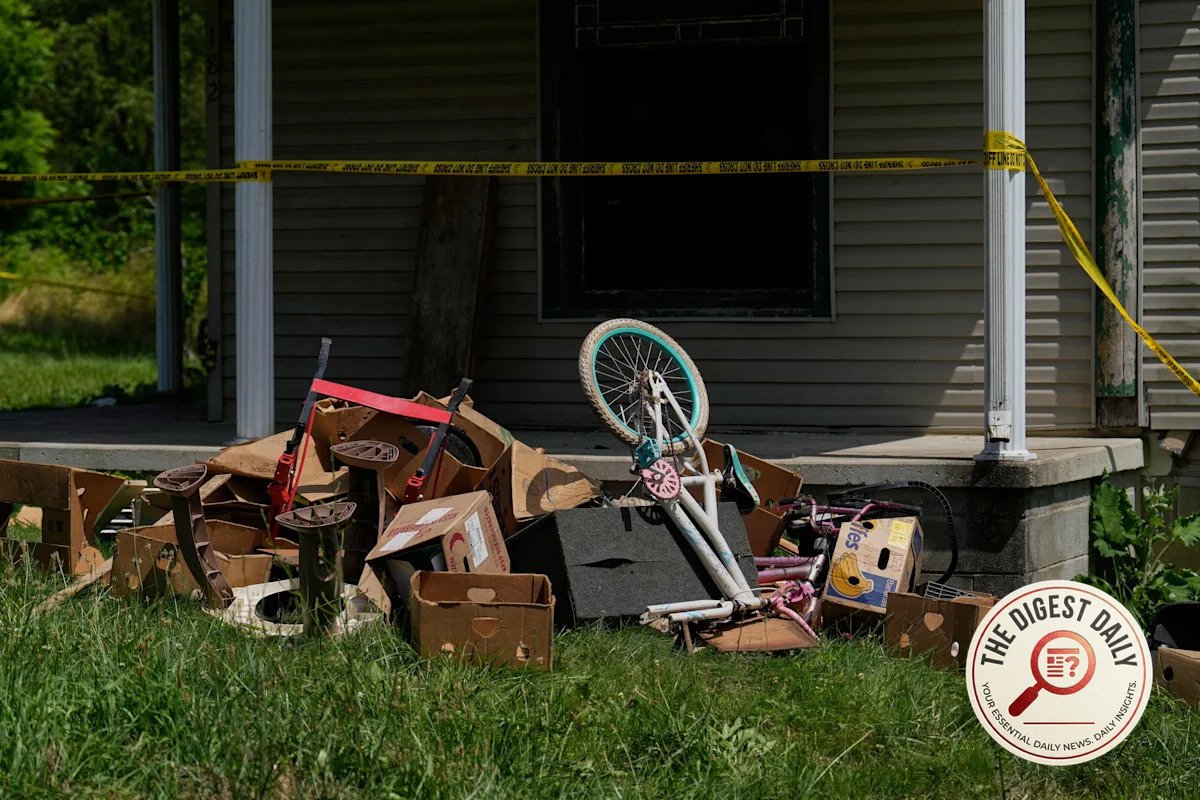
The house sits empty. Busted bicycles and plastic toys rot in the yard under the sweltering heat. It is a silent monument to a quiet, domestic horror.