
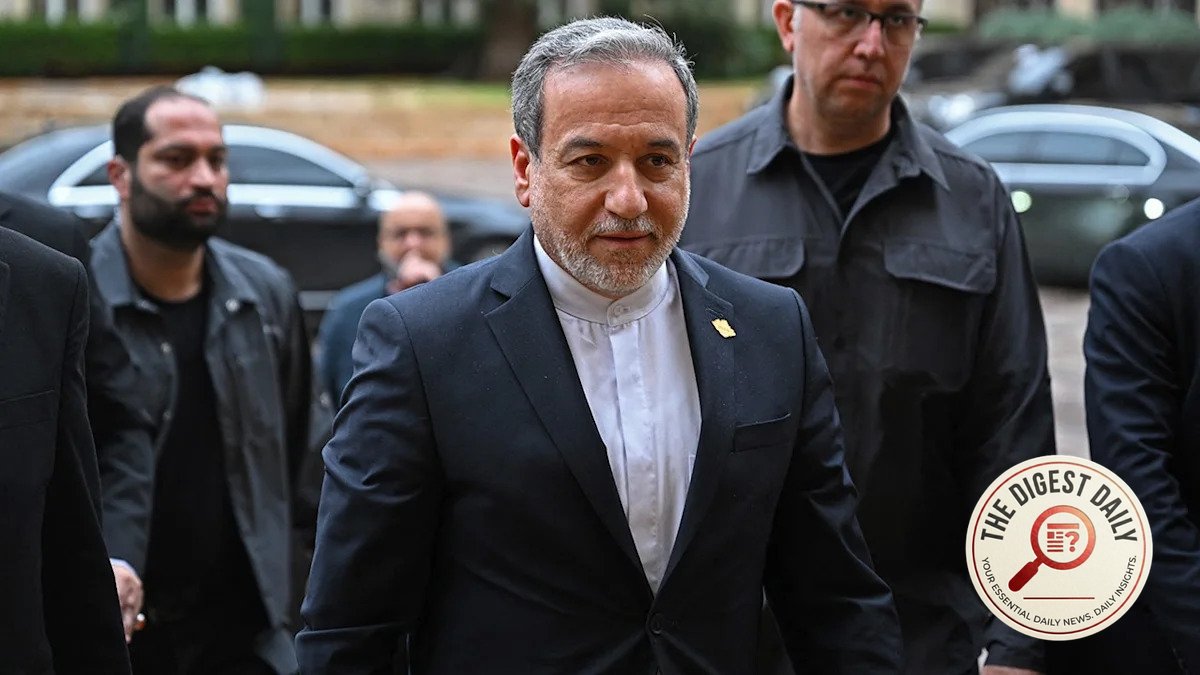
It was a surgical dissection, not a carpet bombing. Iranian Foreign Minister Abbas Araghchi recently went on television to explain how he survived the February 28 blast that vaporized his boss, Supreme Leader Ali Khamenei. He was simply in the wrong room at the right time. Araghchi was briefing an official in one wing of the compound while American and Israeli intelligence targeted the other. One side of the building vanished. His side stood.
This wasn’t mindless destruction. It was a message. According to Dr. Omar Mohammed, a counterterrorism expert at George Washington University, the strike perfectly encapsulates Donald Trump’s foreign policy playbook. Hit them hard. Hit them where they sleep. Then, offer a deal. It is decapitation with an exit ramp. The U.S. and Israel wanted to show they could reach the absolute center of the regime without launching a full-scale ground invasion.
The details of the daylight raid are devastatingly precise. Israeli jets dropped 30 precision-guided munitions alongside Sparrow air-launched ballistic missiles directly onto the compound. Khamenei, 86, died instantly. He wasn’t alone. Defense Minister Amir Nasirzadeh and IRGC Commander Mohammed Pakpour went down with him. Trump bragged about the operation on social media, boasting that American tracking systems left the Iranian leadership completely helpless.
They had a choice. They chose poorly. Instead of taking the quiet exit offered by Washington, Tehran doubled down on chaos. They fired missiles at Israel. They killed a civilian in Bahrain. They struck targets in Kuwait, Qatar, and the UAE, and choked off the Strait of Hormuz, sending global oil markets into a tailspin. The surgical strike was a Western creation, but the grinding war that followed was entirely Tehran’s doing.
Now, the family business continues. Mojtaba Khamenei, the late leader’s son, has taken the throne. He was wounded in the same strike and disappeared for weeks, but now he is playing a double game—screaming defiance in public while quietly whispering to Washington through back channels. The irony is thick. A regime born from a bloody revolution to overthrow a monarchy has just handed the crown from father to son.