
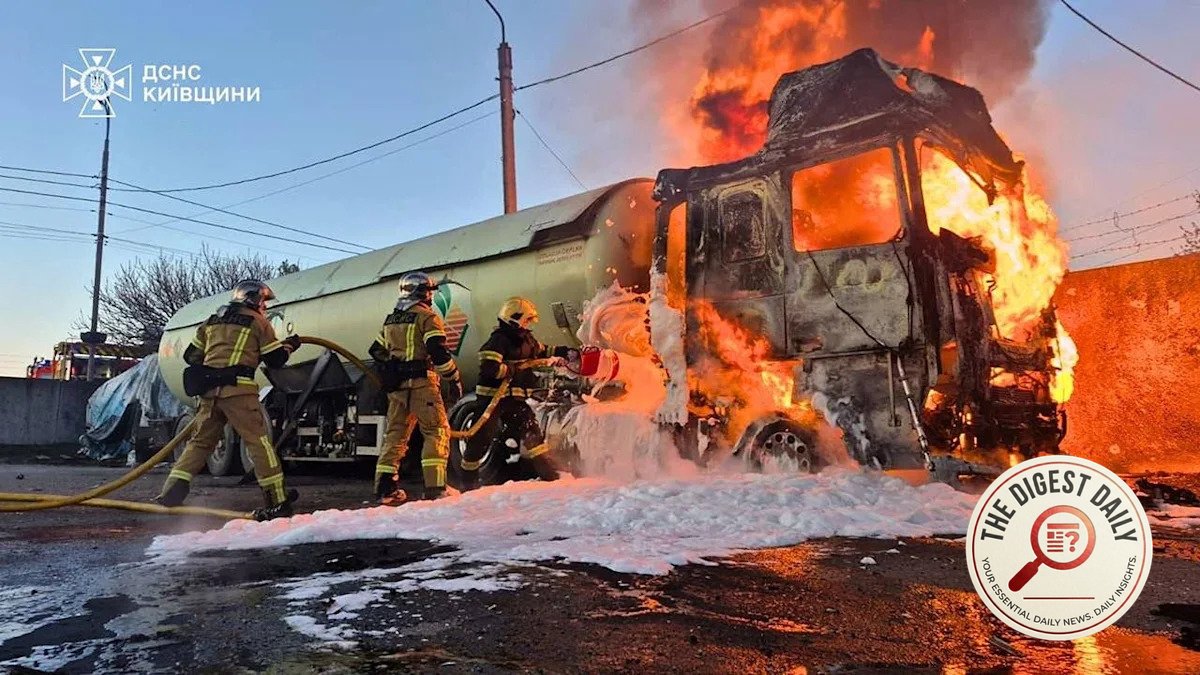
War is a great leveler. For years, Muscovites watched the invasion of Ukraine on state television, safe behind a wall of propaganda and air defenses. Not anymore. Overnight, Kyiv unleashed one of its most massive drone swarms yet, turning the Moscow Oil Refinery in Kapotnya into a towering inferno of black smoke and shattered illusions. It was the second time in three days the facility took a hit.
This was no pinprick. The Kapotnya plant is the beating heart of the capital’s transit system, pumping out 40 percent of Moscow’s fuel and a staggering 70 percent of the surrounding region’s gasoline and aviation fuel. Now, it burns. Videos flooded social media showing massive fireballs lighting up the night sky. The Kremlin’s vaunted air defense shield looked like Swiss cheese.
Panic is a hard thing to censor. “This is pure hell,” one terrified resident told local reporters, wondering aloud when the “madman” in charge would end the slaughter. The Kremlin reacted with predictable paranoia. Red Square was locked down. Machine-gunners took up positions on the ramparts and near Lenin’s tomb. The state is scared.
Moscow Mayor Sergey Sobyanin claimed air defenses knocked down over 130 drones. The Defense Ministry went further, boasting of 550 intercepts across the country. Take those numbers with a grain of salt. Both sides lie. What we do know is that flights were grounded, roads were blocked, and at least 16 people were injured as debris rained down on shopping centers and suburbs.
Kyiv is gloating. Ukrainian Foreign Minister Andrii Sybiha couldn’t resist twisting the knife on social media, mocking the confused locals and reminding them that their own government started this bloodbath. Meanwhile, President Volodymyr Zelenskyy is using the smoke rising over Moscow as leverage. He pitched the strikes to Donald Trump and G7 leaders in France as proof that Ukraine can actually win this thing if given the leash.
It is a strategy of economic attrition. Kyiv calls these strikes “long-range sanctions,” aimed directly at the oil revenues funding Russia’s war machine. While Vladimir Putin was busy playing host to Southeast Asian leaders in Kazan, his logistics were crumbling. Ukrainian forces also hammered road and rail links to occupied Crimea. The empire strikes back, of course. Russian bombers are reportedly on the move, and retaliatory strikes have already hit energy grids near Kyiv and Poltava. The cycle of violence continues, and the bill is coming due for ordinary Russians.