
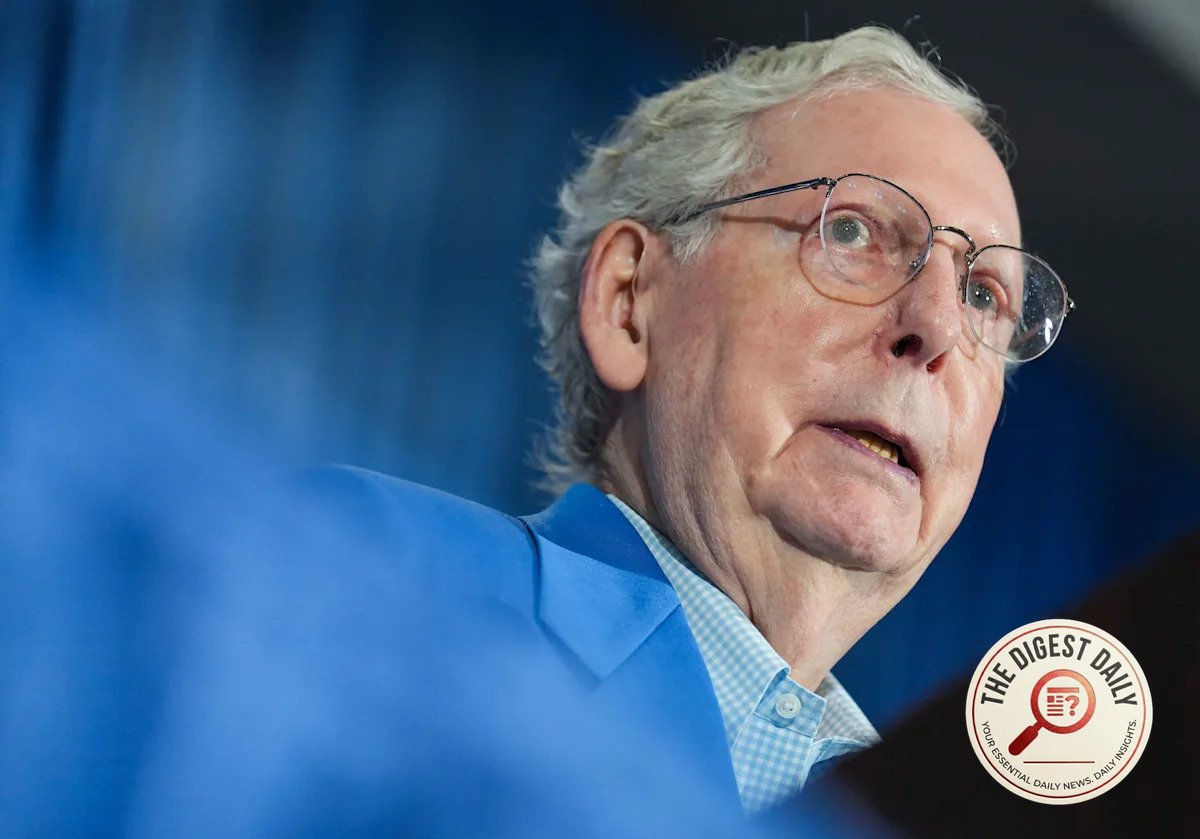
Mitch McConnell is in the hospital. Why? Nobody is saying. But if you believe his inner circle, the 84-year-old senator is spending his mysterious medical confinement hosting a marathon telethon of highly specific, exactly twenty-minute phone calls.
As the vacuum of actual information regarding the Kentucky Republican’s health grows, his allies have launched a coordinated, oddly synchronized public relations offensive. The message is clear: Mitch is fine. In fact, he is chatty.
Senate Majority Leader John Thune reportedly had a “long and substantive” chat with McConnell on July 6. The next day, Senate Majority Whip John Barrasso allegedly clocked in a twenty-minute call. Topics? The Supreme Court, upcoming legislation, and the Maine Senate race. Right on cue, longtime McConnell whisperer Scott Jennings jumped on X to claim he, too, spoke to the senator on July 7. The duration? “Just shy of 20 minutes.”
It is a highly specific metric. It is also a public relations blunder that backfired spectacularly.
Instead of reassuring a skeptical public, the hyper-specific “twenty-minute” talking point triggered immediate internet mockery. Social media users quickly turned the defensive spin into a viral meme, with posters joking about their own intimate, twenty-minute debriefs with the hospitalized lawmaker.
Even political colleagues joined the pile-on. Kentucky Representative Thomas Massie took a satirical swipe on X, claiming McConnell called him to apologize for his primary race and advocate for ending foreign aid. Pop culture figures like Andy Cohen and Lisa Rinna jumped in, claiming the senator called them to gossip about reality television.
Behind the jokes lies a grim reality. McConnell was hospitalized on June 14. Emergency dispatch audio from his Washington residence that morning paints a dark picture, with initial reports of an unconscious individual followed by a call mentioning “cardiac arrest.” McConnell’s office has refused to confirm or deny if the audio pertains to the senator, offering only boilerplate updates that he “continues to improve.”
Politicians deserve privacy. But they are also public servants. When the public is kept in the dark about the health of a powerful lawmaker, suspicion fills the void. No amount of scripted, twenty-minute phone calls will change that.