

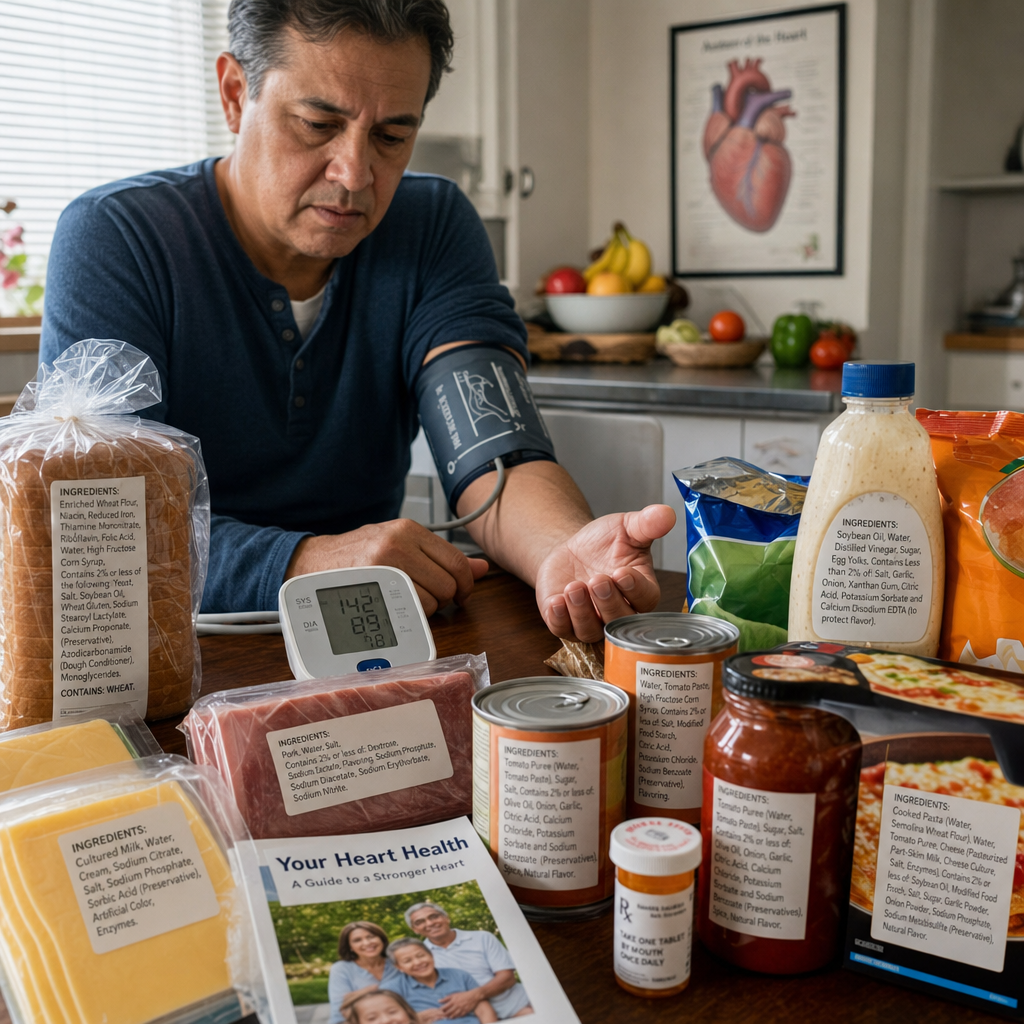
A recent French study has identified a connection between common food preservatives, regularly found in many store-bought items to inhibit bacterial and mold growth, and an elevated risk of high blood pressure and cardiovascular events. The research indicated a 29% greater likelihood of developing high blood pressure and a 16% higher risk of heart attacks and strokes among individuals consuming foods with these preservatives.
Even preservatives often deemed “natural” antioxidants, which are used to prevent discoloration—such as citric acid and ascorbic acid (commonly known as vitamin C)—were associated with a 22% increased risk of high blood pressure in those with higher dietary exposure. Mathilde Touvier, a senior author and principal investigator of the NutriNet-Santé study, clarified via email that while these acids exist naturally in fruits, their role as industrial preservatives means they are “not exactly natural.”
Touvier, who also directs research at France’s National Institute of Health and Medical Research in Paris, emphasized that naturally occurring ascorbic acid and its chemically manufactured additive form might affect health differently. Therefore, the study’s findings regarding these food additives do not apply to the natural compounds present in fruits and vegetables.
This research highlights how various additives in ultra-processed foods (UPFs) might contribute to cardiovascular risks, aligning with recent European Society of Cardiology concerns about UPFs as a public health issue, according to Tracy Parker, nutrition lead at the British Heart Foundation, who was not involved in the study. Prior research has already linked UPFs to significantly higher risks of cardiovascular disease-related death, obesity, sleep disorders, and type 2 diabetes—all factors detrimental to heart health.
Parker noted this pioneering study’s focus on individual preservatives, rather than treating UPFs as a monolithic category. She explained that while UPFs are known for high sugar, salt, and fat content, these factors don’t fully explain their observed harm. This study helps to bridge that explanatory gap.
However, Touvier’s earlier work revealed that only 35% of preservative-containing foods consumed are ultra-processed, indicating the widespread presence of preservatives. Lead author Anaïs Hasenböhler, a doctoral student at the Nutritional Epidemiology Research Team at the Université Sorbonne Paris Nord, stated that there isn’t one specific food group to eliminate, suggesting that consumers should prioritize non- or minimally processed foods. She also recommended opting for fresh, uncooked, unprocessed items or, for convenience, choosing frozen foods preserved by low temperatures rather than chemical additives.
The study, published in the European Heart Journal, analyzed the impact of 58 preservatives on the cardiovascular health of over 112,000 individuals in France, all participants of the NutriNet-Santé study since 2009. Participants meticulously tracked their food and drink intake for three days every six months, with researchers using a product ingredient database to link preservative consumption levels to medical data.
Out of 17 widely consumed preservatives, eight were associated with higher blood pressure over a decade. Three of these—potassium sorbate, potassium metabisulphite, and sodium nitrite—are non-antioxidant preservatives that combat bacteria, molds, and yeast. These are found in products like wine, baked goods, processed meats, and fermented beverages. The link between nitrates/sulfur compounds and heart disease in processed meats was not unexpected.
Gunter Kuhnle, a professor of food and nutritional science at the University of Reading, who was not involved in the study, acknowledged the vital role of preservatives in food safety, waste reduction, and shelf life extension. The remaining preservatives linked to high blood pressure—ascorbic acid, sodium ascorbate, sodium erythorbate, citric acid, and rosemary extracts—are antioxidant preservatives used to prevent oxidation and spoilage. Ascorbic acid was specifically linked to cardiovascular disease.
These findings build upon Touvier’s team’s prior research, which established similar links between preservatives and increased risks of cancer and type 2 diabetes. Six preservatives (sodium nitrite, potassium nitrate, sorbates, potassium metabisulfite, acetates, and acetic acid) were associated with up to a 32% increased risk of various cancers, and all but one of these also boosted the risk of type 2 diabetes by 49%.
While this observational study cannot prove causation, it rigorously controlled for confounding factors such as age, BMI, smoking, physical activity, and general diet, according to Rachel Richardson, a methods support unit manager for The Cochrane Collaboration. Richardson, also not involved in the study, praised the study’s robust assessment of diets and comprehensive identification of hypertension and cardiovascular disease, concluding that the results warrant further investigation.