

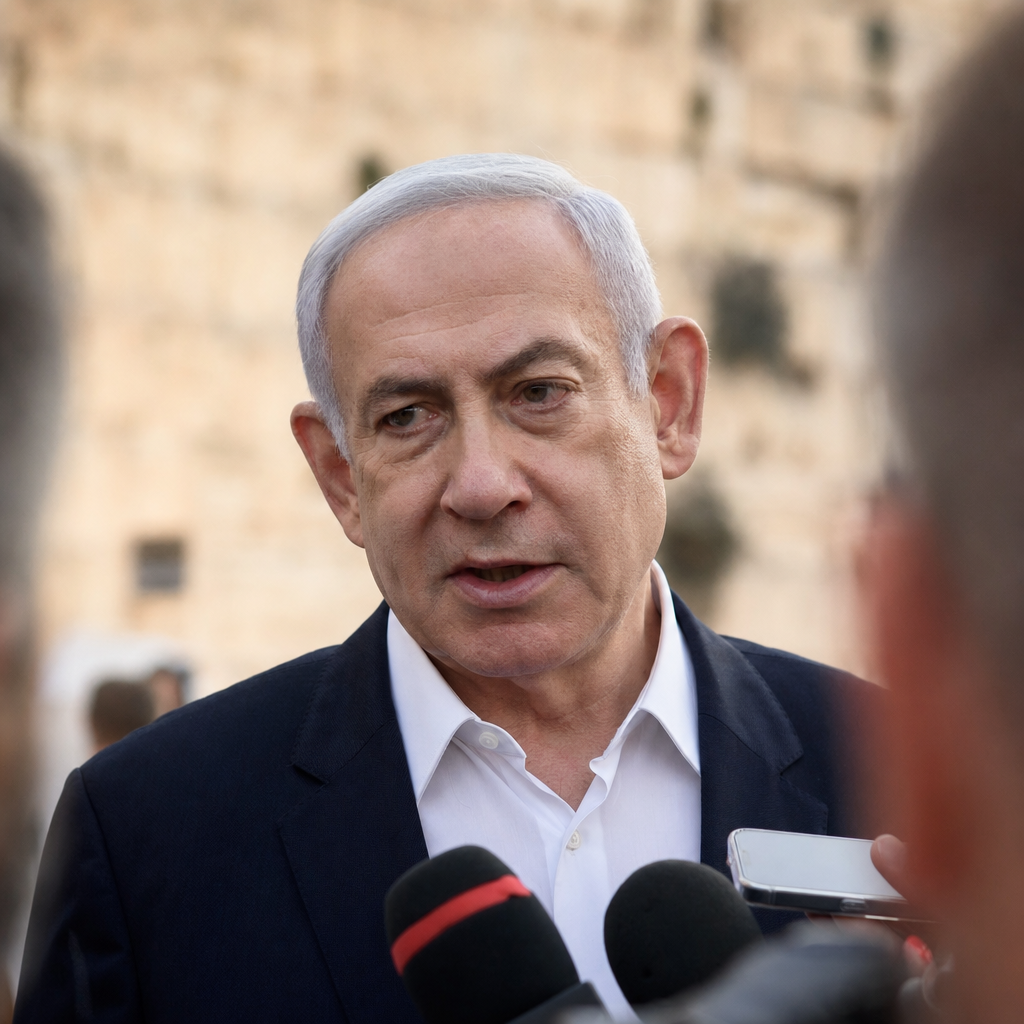
JERUSALEM (AP) — Yair Lapid, Israel’s opposition leader, declared on Monday that the proposed agreement between the U.S. and Iran falls short of achieving Israel’s strategic objectives for the ongoing conflict, simultaneously accusing Prime Minister Benjamin Netanyahu of failing to secure a more favorable outcome. Lapid, who is part of a political alliance aimed at ousting Netanyahu in the upcoming elections, described the emerging deal’s details as troubling.
“This deal is detrimental to Israel, harmful to the wider region, and disadvantageous to the citizens of Iran,” Lapid informed journalists in Jerusalem.
On February 28, Israel and the U.S. initiated the conflict with stated goals of dismantling Iran’s ballistic missile program, curtailing its support for proxy militant factions across the Middle East, and eliminating Iran’s capability to develop nuclear weapons. Both Netanyahu and President Donald Trump had also expressed hopes of fostering conditions that could lead to the overthrow of Iran’s government.
Regional officials indicate that the current proposed deal involves Iran relinquishing its reserves of highly enriched uranium and reopening the critical Strait of Hormuz. In return, the U.S. would lift its blockade on Iranian ports and remove sanctions against Iran. Crucial aspects of Iran’s nuclear program would then be negotiated over a 60-day period. It remains uncertain whether the agreement will address concerns about Iran’s missile development or its backing of regional militant groups.
Lapid acknowledged Trump’s role in initiating the conflict with Israel but criticized Netanyahu for permitting Washington to negotiate a potential deal with minimal consultation with Israel. “The Israeli government’s capacity to influence decisions in Washington is at an all-time low,” he stated, referencing Trump’s recent comment: “Netanyahu will do whatever I want him to do.”
An official familiar with the Israeli Prime Minister’s discussions with Trump, who spoke anonymously due to not being authorized to comment publicly, noted that Netanyahu has consistently emphasized Israel’s “freedom of action” against threats in any domain. Lapid underscored this point, asserting, “Israel is a sovereign state; we are neither a vassal state nor a protectorate.”
Lapid, who leads the centrist Yesh Atid party, briefly served as prime minister in 2022 as part of a power-sharing arrangement with Naftali Bennett, leader of a smaller conservative party. Their coalition had brought an end to Netanyahu’s 12-year tenure. The two leaders have once again merged their parties into a single faction, headed by Bennett, as they prepare to challenge Netanyahu in elections slated for before the end of October.
Since Netanyahu’s return to power in late 2022, Lapid has served as Israel’s opposition leader, while Bennett took a sabbatical from politics. Their current alliance seeks to consolidate a fragmented opposition, largely united by their shared antagonism toward Netanyahu.
Lapid, one of the dwindling number of Israeli politicians who supports Palestinian independence, indicated that this issue would not be on the agenda of the next government. He argued that conditions are not conducive following the trauma of the Hamas attacks on October 7, 2023, and the subsequent conflicts. “There will be no two-state solution in the coming years, as Israelis now perceive this as simply leading to another failed terrorist state on our borders,” Lapid stated, adding that the Palestinian Authority lacks the capability to effectively prevent attacks against Israel. However, Lapid affirmed his opposition to unilateral actions that would preclude a future Palestinian state and noted he has received assurances from Bennett, a former West Bank settlement leader, that Israel will not proceed with annexing the occupied territory.
Lapid also dismissed the possibility of forming a coalition with Arab parties to unseat Netanyahu. Opinion polls suggest that Bennett and Lapid might struggle to form a governing majority without the support of some Arab lawmakers, unlike their previous government. In 2021, they broke a long-standing political taboo by including Mansour Abbas, leader of a small Arab faction, in Israel’s governing coalition—a historical first. Lapid clarified that his prior collaboration with Abbas was “the appropriate government for that period,” but emphasized that Israel’s current situation is vastly different after nearly three years of conflict, and therefore, he and Bennett will not form a coalition with Abbas’s party in the upcoming elections.