
Three sons of the late Iranian leader Ayatollah Ali Khamenei stood over his coffin on Sunday. They prayed. They wept. But the one son everyone wanted to see—Mojtaba, the man who inherited the supreme leadership—was nowhere to be found.
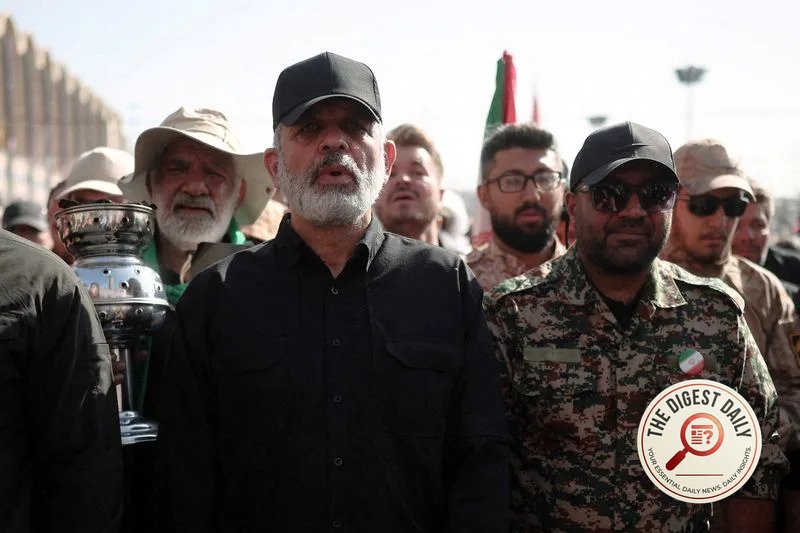
State television captured the scene. Mostafa, Meysam, and Masoud Khamenei stood in the vast courtyard of Tehran’s Imam Khomeini Grand Mosalla. Before them lay five coffins. Their father and four other family members were wiped out on February 28. It was the opening salvo of a brutal, weeks-long war launched by the United States and Israel.
That war is paused now. A shaky ceasefire holds. The conflict left a trail of wreckage across the Middle East, but Iran’s theocratic regime, propped up by the Islamic Revolutionary Guards Corps, remains firmly in the saddle. Now comes the theater of grief. The state is staging a week of massive, highly choreographed funeral processions. They even plan to parade the late leader’s remains through Shi’ite holy sites in neighboring Iraq.
On Saturday, the regime put the bodies on display. Khamenei’s coffin sat under glass alongside his daughter, son-in-law, daughter-in-law, and his 14-month-old granddaughter. By Sunday, the masses arrived. Tens of thousands of soldiers, seminary students, and ordinary citizens choked the Mosalla. They waved flags. They chanted for revenge against Washington and Tel Aviv. They prayed at the massive complex named after Khomeini, the man Khamenei replaced back in 1989.
Yet, Mojtaba remains a ghost. Not a single photo of the new supreme leader has surfaced since the February strike. Rumors swirl. Sources close to his inner circle whisper that the attack left him badly disfigured and severely injured in his legs.
The public is noticing. One young woman, speaking to the semi-official Tasnim news agency, admitted she waited until the very last moment hoping to glimpse the new ruler. It was, she said, the crowd’s only wish.
Tehran is spinning the ceasefire as a triumph. Officials claim the deal with Washington will unlock billions in frozen assets and lift crippling financial sanctions. They call it a victory over a superpower. But the cost was staggering. Over 3,000 Iranians died, including top politicians and generals. Infrastructure lies in ruins. Still, Iran proved it could hurt its enemies. It struck U.S. bases, rattled Gulf neighbors, and choked the Strait of Hormuz. Energy prices spiked. That pain is what reportedly drove U.S. President Donald Trump to scramble for a deal. Trump recently noted that peace talks are on hold for a week to let the funeral play out.
On Sunday, President Masoud Pezeshkian and Parliament Speaker Mohammad Baqer Qalibaf joined the prayers. Masoud Khamenei wept openly, wiping his face with a keffiyeh.
The crowds in Tehran are immense. The metro system reported a staggering 7 million trips overnight as mourners flooded the city center. On Monday, a massive procession will choke the capital. Then, the bodies head to Qom, the heart of Iran’s clerical establishment. By Wednesday, they fly to Iraq’s holy cities of Najaf and Kerbala, before returning Thursday for burial in Mashhad. The regime is pulling out all the stops, offering free food, transport, and lodging to ensure millions line the streets.