
Jim Lindsey is dead. The former Arkansas Razorbacks running back and Minnesota Vikings champion passed away at 81, the university announced Monday. He lived a life defined by collision, cash, and dirt.
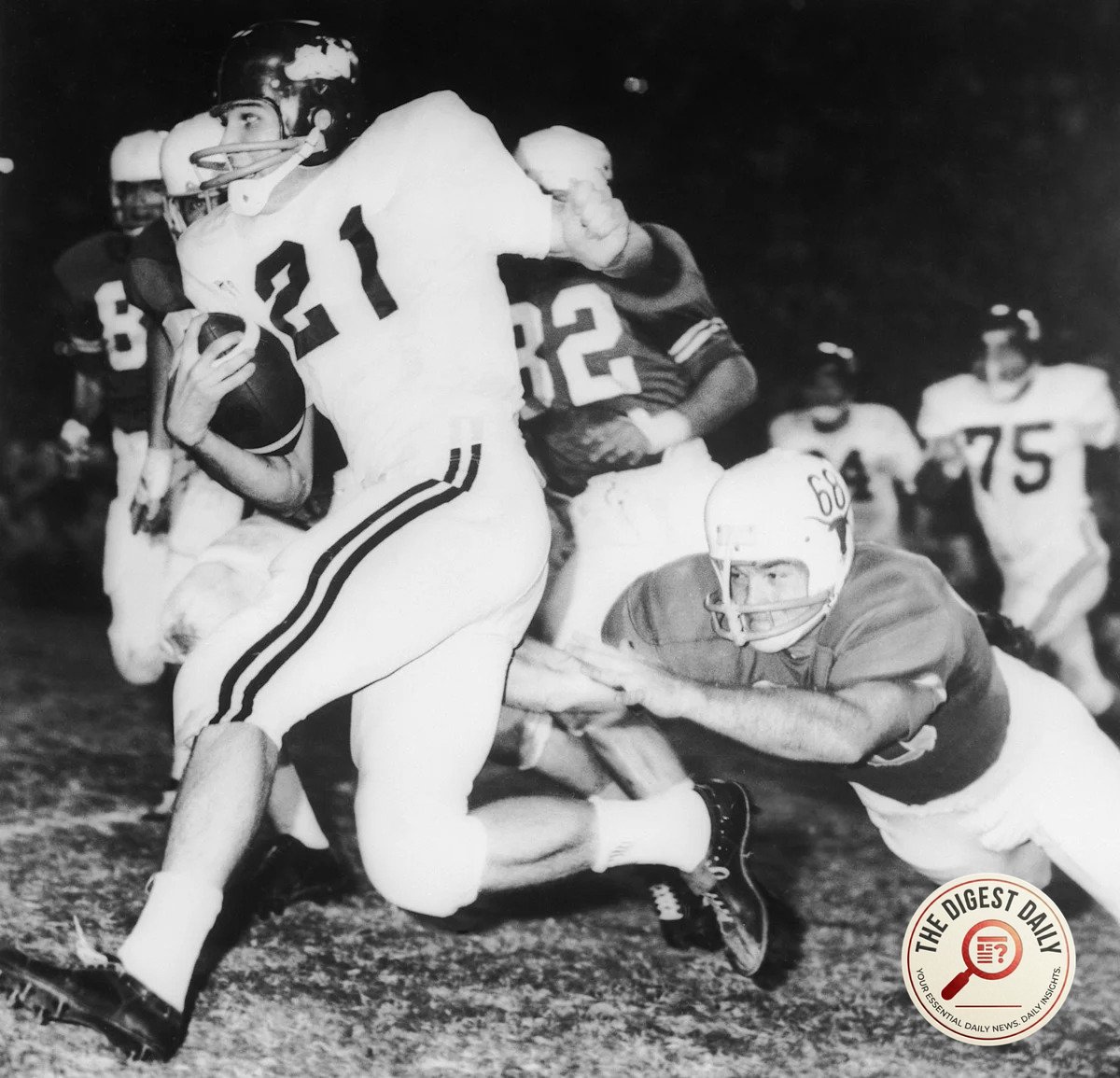
Lindsey wasn’t just another name in the program’s history books. He was a cornerstone. From 1963 to 1965, he tore up the turf for the Razorbacks. His crowning collegiate achievement came in 1964. That year, Arkansas went a perfect 11-0, capping the run with a gritty 10-7 victory over Nebraska in the Cotton Bowl.
College football back then was a messy business. No playoff brackets. Just sportswriters arguing in smoke-filled rooms. The Razorbacks claimed the national title via the Football Writers Association of America. Meanwhile, Alabama and Notre Dame grabbed their own versions of the crown from other outlets. It was a split verdict, but Arkansas didn’t care. They had the rings.
Lindsey’s college stat sheet was solid. He carried the ball 276 times for 1,177 yards and seven scores, adding another 584 yards through the air. The state noticed. They put him in the Arkansas Sports Hall of Fame in 1987 and the Razorbacks Hall of Honor a decade later.
Then came the pros. In 1966, both the AFL’s Buffalo Bills and the NFL’s Minnesota Vikings drafted him in the second round. Lindsey chose the cold of Minnesota. He stayed there for seven seasons, securing an NFL championship in 1969 before the league fully merged. He ground out 566 rushing yards and six touchdowns on the frozen tundra, proving he could take a hit at the highest level.
But Lindsey was smarter than the average gridiron grunt. He knew football was a temporary gig. In 1966, he took his $75,000 Vikings signing bonus—a fortune back then—and bought 137 acres of dirt in Fayetteville. That dirt became an empire. In 1985, he launched Lindsey Management Co., a real estate behemoth that grew to employ over 800 people across seven states.
He came from a generation where work was the only option. His father, forced to labor early in life, pushed Lindsey toward the classroom and the football field. For a kid from Arkansas, playing for the Razorbacks seemed like a pipe dream. Lindsey once likened the ambition to stepping into Yankee Stadium and hitting three home runs. He did it anyway.
Tributes poured in following the news. Coach Ryan Silverfield praised Lindsey’s enduring influence, calling him a foundational pillar of the program whose legacy would stretch far beyond his playing days. He was a local boy who made good, took his licks, and built a fortune out of the red Arkansas clay.