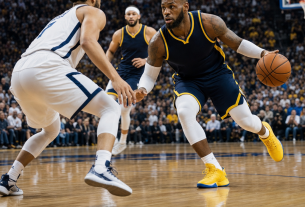

Everyone promised a chaotic night of blockbuster trades. Instead, we got a snooze-fest. The first trade didn’t drop until pick 16, and even then, general managers just swapped future draft assets like kids trading baseball cards. No real players moved. Still, the draft board shook up. Dallas grabbed Morez Johnson Jr. at nine, reuniting him with Dusty May, his old college coach from that Michigan championship run. Meanwhile, the Knicks did what the Knicks do: they hoarded second-rounders and cash, trading down from 24 to keep their expensive roster intact. Now, the first round is dead. But the scrap heap is full of gold. Here are the ten best prospects left on the board.
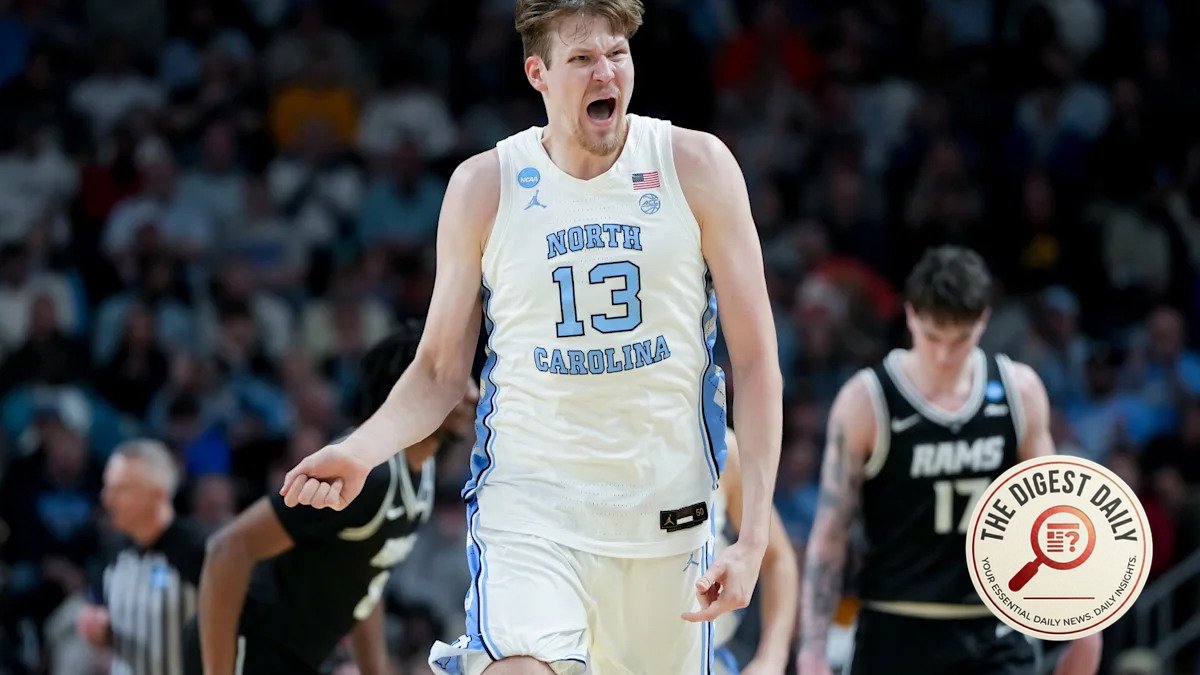
Henri Veesaar, North Carolina
He is a seven-foot unicorn. After two quiet years at Arizona, he exploded for the Tar Heels. He averaged 17.0 points, 8.7 boards, and shot a ridiculous 42.6 percent from deep. He can pass. He can protect the rim. Several teams drafting late in the first round will regret passing on him. He is an instant-impact backup big man for whoever calls his name today.
Meleek Thomas, Arkansas
The hype train derailed. Once a five-star recruit, Thomas stumbled through a mediocre freshman year with the Razorbacks. He still put up 15.6 points and 2.5 assists, but a terrible combine showing tanked his stock. He slid. Now, he is a second-round gamble. The talent is there, but the motor is a question mark.
Richie Saunders, BYU
He is old. He turns 25 in September, and he is currently recovering from a torn ACL suffered in February. Do not let that scare you. Saunders is a modern wing who does everything. He averaged 18.0 points, 5.8 rebounds, and 1.7 steals while hitting 2.6 triples per game. He will miss the start of the season, but he is a plug-and-play rotation piece.
Isaiah Evans, Duke
He barely played as a freshman, but he became a weapon last year. Evans averaged 15.0 points and shot the lights out, averaging 2.7 threes per game. He is skinny, but he improved his finishing at the rim. Expect him to go early in the second round and immediately find a home in someone’s shooting rotation.
Bruce Thornton, Ohio State
Let’s get one thing straight: he is not Jalen Brunson. Comparing anyone to Brunson is a death sentence. But Thornton has that same stocky, bulldog mentality. He spent four years dominating at Ohio State, capping it off with 19.9 points and 3.9 assists per game last season. He is efficient, smart, and tough. Someone is getting a massive steal.
Trevon Brazile, Arkansas
He is 23. He spent five years in college. He is not a future superstar. But look at the physical profile. At nearly 6-foot-11, Brazile has a 7-foot-4 wingspan and a 41.5-inch vertical. Last year, he averaged 13.0 points, 7.3 rebounds, and 1.6 blocks. He is a physical freak who can hit the occasional three. That is worth a second-round pick.
Jack Kayil, Alba Berlin
Playing professional basketball in Germany as a kid is brutal. Kayil was highly inefficient, but he still managed 12.2 points and 3.6 assists. He is a project. Rebuilding teams should take a flyer on him. The upside is real.
Tamin Lipsey, Iowa State
He is small. He cannot shoot from the outside. But he wins games. Lipsey averaged 13.5 points, 5.1 assists, and a pesky 2.3 steals last season. He is a defensive menace who knows how to run an offense. He will carve out a long career as a backup point guard.
Baba Miller, Cincinnati
He is 22 and cannot shoot. That is the bad news. The good news is that he is nearly seven feet tall, defends like crazy, and passes like a guard. He averaged 13.0 points, 10.3 rebounds, and 3.7 assists last year. He is a unique, versatile frontcourt piece.
Ugonna Onyenso, Virginia
He is a simple player. He protects the paint. In just 18.6 minutes per game, he swatted 2.9 shots. He even started shooting threes last year, which is a hilarious development for a guy who attempted one triple in his first three years of college. He is a specialist, but paint protection always has a market.